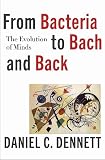
The Evolution of Minds
by Daniel C. Dennett
Recommended by 3 notable people, including Vinod Khosla and Ray Dalio
Check price on AmazonRecommended by public sources
Amazon availability
See customer reviews on Amazon →Reading experience is dense, argumentative, and idea-rich, with Dennett advancing a single, broad thesis through history, thought experiments, and selective scientific examples. The most useful part is the long chain of linked metaphors and conceptual moves that track how simple biological systems plus cultural transmission might build minds. Its main limitation is repeated digressions and polemical rebuttals that can feel tiresome; it doesn't provide practical how-tos or hands-on exercises. Expect rewards if you enjoy sustained conceptual argument; expect friction if you prefer short summaries.
This summary and audience guidance are AI-generated from the book's description and its recommendation history, last updated May 2026. Recommendations, quotes and sources elsewhere on this page come from published material and are not generated.
How did we come to have minds For centuries, poets, philosophers, psychologists, and physicists have wondered how the human mind developed its unrivaled abilities. Disciples of Darwin have explained how natural selection produced plants, but what about the human mindIn From Bacteria to Bach and Back, Daniel C. Dennett builds on recent discoveries...
Difficulty:hard
Check formats, pricing, and availability options for Kindle, physical print, or audiobooks directly.
View available editions on AmazonWhy recommended
Recommended by 6 sources and appears in Most Recommended Books, Philosophy, and Psychology.
People and public figures who have recommended this book.
Recommendation proof is sourced from public posts, interviews, reading lists, and cited references.
Check formats, pricing, and availability options directly on Amazon.
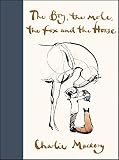
Consider The Boy, the Mole, the Fox and the Horse by Charlie Mackesy. Recommended by 8 sources.
“Soft-spoken, heavily illustrated fable built from short dialogues and watercolor sketches. Each spread pairs a spare line of text with a loose drawing, so the pleasure is visual and aphoristic rather than narrative; readers collect felt-true sentences more than plot. Most useful when you want quick consolations, a prompt for conversation with a child, or a pause during a rough day. Limiting if you want sustained argument, concrete advice, or tightly plotted storytelling: the repetition of gentleness can feel sentimental or thin after a while.”
Each recommendation is collected from a public source — interviews, articles, or curated lists — and linked to its original URL. Books with many verifiable recommendations from respected people rank higher.