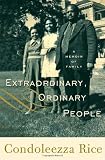
Extraordinary, Ordinary People
A Memoir of Family
by Condoleezza Rice
Reading Profile
Should I read this?
Rice writes a memoir that mixes personal anecdotes — her upbringing and life as a concert pianist — with inside accounts of late‑Cold War diplomacy and post‑9/11 policy making. What works best is direct, scene-by-scene recollection of meetings, decisions, and the habits that shaped a public career; useful for readers wanting primary-perspective color more than analytic depth. The main limitation is episodic, sometimes defensive narration that glosses complex controversies and can feel heavy on assertion and light on systematic evidence.
Read this if...
- •a graduate student in international relations racing to finish a seminar paper on US decision-making around early‑21st century security policy — valuable now for meeting-level anecdotes and timeline anchors you can cite as firsthand texture, not as substitute for archival sources
- •a congressional foreign‑policy staffer drafting a short briefing for a newly elected member who needs humanizing scenes and concrete habit examples to explain what a national security advisor does — useful immediately for pulling vivid quotes and episode summaries into a 1–2 page memo
- •a culture reporter preparing a feature on leaders with artistic training and how practice habits influence workplace behavior — fits now if you need specific anecdotes about musical discipline, rehearsal routines, and performance pressure to illustrate a column or profile on deadline
Skip this if...
- •you'll likely put it down when the narrative shifts into long, procedural recitations of meetings, policy timelines, and defensive explanations — that mid-section slows the pace for many readers
- •annoying if you prefer dispassionate, source-heavy history: the account leans on recollection and assertion rather than systematic citation or opposing viewpoints
- •not for readers seeking a brisk investigative read or an explicitly critical appraisal of decisions — the tone often reads as personal justification and selective memory
Condoleezza Rice has excelled as a diplomat, political scientist, and concert pianist. Her achievements run the gamut from helping to oversee the collapse of communism in Europe and the decline of the Soviet Union, to working to protect the country in the aftermath of 911, to becoming only the second woman and the first black woman ever to s...
Before You Buy
Reading Specifications
Difficulty:hard
Audience Fit
- a graduate student in international relations racing to finish a seminar paper on US decision-making around early‑21st century security policy — valuable now for meeting-level anecdotes and timeline anchors you can cite as firsthand texture, not as substitute for archival sources
- a congressional foreign‑policy staffer drafting a short briefing for a newly elected member who needs humanizing scenes and concrete habit examples to explain what a national security advisor does — useful immediately for pulling vivid quotes and episode summaries into a 1–2 page memo
- a culture reporter preparing a feature on leaders with artistic training and how practice habits influence workplace behavior — fits now if you need specific anecdotes about musical discipline, rehearsal routines, and performance pressure to illustrate a column or profile on deadline
- you'll likely put it down when the narrative shifts into long, procedural recitations of meetings, policy timelines, and defensive explanations — that mid-section slows the pace for many readers
- annoying if you prefer dispassionate, source-heavy history: the account leans on recollection and assertion rather than systematic citation or opposing viewpoints
- not for readers seeking a brisk investigative read or an explicitly critical appraisal of decisions — the tone often reads as personal justification and selective memory
Check formats, pricing, and availability options for Kindle, physical print, or audiobooks directly.
View available editions on AmazonKey themes
Why recommended
Recommended by 2 sources and appears in Most Recommended Books, Politics, and Social Sciences.
Recommended by notable people
People and public figures who have recommended this book.
Recommendation Signals
Recommendation proof is sourced from public posts, interviews, reading lists, and cited references.
Hugh Hewitt
“@tomricks1 Dr. @CondoleezzaRice heard the bomb go off from her home. Her memoir of her childhood in ?Bombingham? and her amazing parents is quite a remarkable book: Extraordinary, Ordinary People: A Memoir of Family | @tomricks1 Dr. @CondoleezzaRice heard the bomb go off from her home. Her memoir of her childhood in “Bombingham” and her amazing parents is quite a remarkable book: Extraordinary, Ordinary People: A Memoir of Family”
Appears In

Not sure if this is the right fit?
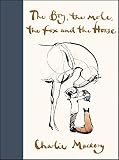
Consider The Boy, the Mole, the Fox and the Horse by Charlie Mackesy. Recommended by 8 sources.
“Soft-spoken, heavily illustrated fable built from short dialogues and watercolor sketches. Each spread pairs a spare line of text with a loose drawing, so the pleasure is visual and aphoristic rather than narrative; readers collect felt-true sentences more than plot. Most useful when you want quick consolations, a prompt for conversation with a child, or a pause during a rough day. Limiting if you want sustained argument, concrete advice, or tightly plotted storytelling: the repetition of gentleness can feel sentimental or thin after a while.”
Similar books

The Boy, the Mole, the Fox and the Horse
Charlie Mackesy
The World as It Is
Ben Rhodes
Out of Control
Kevin Kelly
The Bully Pulpit
Doris Kearns Goodwin
The Seven Spiritual Laws of Success
Deepak Chopra
Billions and Billions
Carl Sagan
Anger
Gary ChapmanFactfulness
Hans RoslingHow recommendation signals are reviewed
Each recommendation is collected from a public source — interviews, articles, or curated lists — and linked to its original URL. Books with many verifiable recommendations from respected people rank higher.