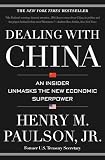
An Insider Unmasks the New Economic Superpower
by Henry M. Paulson

Recommended by Mark Zuckerberg
Check price on AmazonProof-backed recommendation
Amazon availability
Paulson's account reads like a business‑statesman memoir: close, detail‑rich, and full of negotiation scenes from his years at Goldman Sachs and as Treasury secretary. The most useful parts are concrete descriptions of how economic dialogues, deal‑making, and market‑access talks actually unfolded, including specific policy trade‑offs and the limitations of leverage. The main limitation is a strong insider perspective that sometimes slips into defensiveness and replays of meetings rather than big‑picture analysis. Expect useful operational color for practitioners but fewer broad, critical analyses for scholars or skeptics.
This summary and audience guidance are AI-generated from the book's description and its recommendation history, last updated June 2026. Recommendations, quotes and sources elsewhere on this page come from published material and are not generated.
Hank Paulson has dealt with China unlike any other foreigner. As head of Goldman Sachs, Paulson had a pivotal role in opening up China to private enterprise. Then, as Treasury secretary, he created the Strategic Economic Dialogue with what is now the world's secondlargest economy. He negotiated with China on needed economic reforms, while safeguar...
Difficulty:hard
Check formats, pricing, and availability options for Kindle, physical print, or audiobooks directly.
View available editions on AmazonWhy recommended
Recommended by 3 sources and appears in Most Recommended Books, Finance, and Politics.
People and public figures who have recommended this book.
Recommendation proof is sourced from public posts, interviews, reading lists, and cited references.
Check formats, pricing, and availability options directly on Amazon.
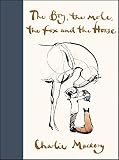
Consider The Boy, the Mole, the Fox and the Horse by Charlie Mackesy. Recommended by 8 sources.
“Soft-spoken, heavily illustrated fable built from short dialogues and watercolor sketches. Each spread pairs a spare line of text with a loose drawing, so the pleasure is visual and aphoristic rather than narrative; readers collect felt-true sentences more than plot. Most useful when you want quick consolations, a prompt for conversation with a child, or a pause during a rough day. Limiting if you want sustained argument, concrete advice, or tightly plotted storytelling: the repetition of gentleness can feel sentimental or thin after a while.”
Each recommendation is collected from a public source — interviews, articles, or curated lists — and linked to its original URL. Books with many verifiable recommendations from respected people rank higher.