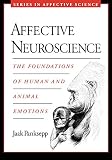
Affective Neuroscience
The Foundations of Human and Animal Emotions
by Jaak Panksepp
Recommended by Jordan Peterson and Geoffrey Miller
Check price on AmazonProof-backed recommendation
Amazon availability
Reading Profile
Should I read this?
Affective Neuroscience reads like a committed scientist laying out a theory: it presents neuroscience evidence and animal-work to argue that emotions have biological substrates. The value is a coherent, richly referenced case linking subcortical circuits to core affective responses, useful for forming a research or teaching scaffold. The main limitation is style and density — long method descriptions and technical neuroanatomy slow the narrative, so casual readers or those after brief synopses will find stretches tedious.
Read this if...
- •PhD student in affective neuroscience drafting a dissertation chapter on subcortical emotion systems who needs a single, detailed theoretical account and primary-study references to define terms and frame hypotheses before writing the methods section.
- •assistant professor teaching an advanced seminar in psychology or neuroscience this term who must assemble week-by-week readings and wants animal studies, circuit examples, and a clear argumentative stance to provoke class discussion and exam questions.
- •postdoctoral researcher planning rodent lesion/electrophysiology experiments who needs methodological precedents and conceptual framing to justify chosen neural targets and behavioral paradigms for an upcoming grant application.
Skip this if...
- •you'll likely put it down when long sections of lesion studies, electrophysiology, and brain-region detail pile up without narrative relief — that mid-book methods grind is a common drop-off point.
- •annoying if you prefer anecdote-driven, accessible pop science or clear hands-on takeaways — this lacks bite-sized summaries and practical exercises.
- •frustrating if you want up-to-date reviews of every recent finding; the book reads like a focused theoretical case and can feel dated on later empirical debates.
Some investigators have argued that emotions, especially animal emotions, are illusory concepts outside the realm of scientific inquiry. However, with advances in neurobiology and neuroscience, researchers are demonstrating that this position is wrong as they move closer to a lasting understanding of the biology and psychology of emotion. In Affect...
Before You Buy
Reading Specifications
Difficulty:hard
Audience Fit
- PhD student in affective neuroscience drafting a dissertation chapter on subcortical emotion systems who needs a single, detailed theoretical account and primary-study references to define terms and frame hypotheses before writing the methods section.
- assistant professor teaching an advanced seminar in psychology or neuroscience this term who must assemble week-by-week readings and wants animal studies, circuit examples, and a clear argumentative stance to provoke class discussion and exam questions.
- postdoctoral researcher planning rodent lesion/electrophysiology experiments who needs methodological precedents and conceptual framing to justify chosen neural targets and behavioral paradigms for an upcoming grant application.
- you'll likely put it down when long sections of lesion studies, electrophysiology, and brain-region detail pile up without narrative relief — that mid-book methods grind is a common drop-off point.
- annoying if you prefer anecdote-driven, accessible pop science or clear hands-on takeaways — this lacks bite-sized summaries and practical exercises.
- frustrating if you want up-to-date reviews of every recent finding; the book reads like a focused theoretical case and can feel dated on later empirical debates.
Check formats, pricing, and availability options for Kindle, physical print, or audiobooks directly.
View available editions on AmazonKey themes
Why recommended
Recommended by 3 sources and appears in Most Recommended Books, Psychology, and Science.
Recommended by notable people
People and public figures who have recommended this book.
Recommendation Signals
Recommendation proof is sourced from public posts, interviews, reading lists, and cited references.
Jordan Peterson
Clinical psychologist and author
“@Barry68141605 Great book. Used chapters from it in my Human Emotions course! | Here is a list of books that I found particularly influential in my intellectual development.”
View sources (2) ▾80%
Appears In

Not sure if this is the right fit?
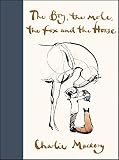
Consider The Boy, the Mole, the Fox and the Horse by Charlie Mackesy. Recommended by 8 sources.
“Soft-spoken, heavily illustrated fable built from short dialogues and watercolor sketches. Each spread pairs a spare line of text with a loose drawing, so the pleasure is visual and aphoristic rather than narrative; readers collect felt-true sentences more than plot. Most useful when you want quick consolations, a prompt for conversation with a child, or a pause during a rough day. Limiting if you want sustained argument, concrete advice, or tightly plotted storytelling: the repetition of gentleness can feel sentimental or thin after a while.”
Similar books

The Boy, the Mole, the Fox and the Horse
Charlie Mackesy
The World as It Is
Ben Rhodes
Out of Control
Kevin Kelly
The Bully Pulpit
Doris Kearns Goodwin
The Seven Spiritual Laws of Success
Deepak Chopra
Billions and Billions
Carl Sagan
Anger
Gary ChapmanFactfulness
Hans RoslingHow recommendation signals are reviewed
Each recommendation is collected from a public source — interviews, articles, or curated lists — and linked to its original URL. Books with many verifiable recommendations from respected people rank higher.