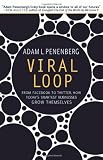
From Facebook to Twitter, How Today's Smartest Businesses Grow Themselves
by Adam L. Penenberg
Recommended by public sources
Amazon availability
Sharp, narrative-driven chapters present case studies of early product-driven viral growth, so reading feels like flipping through focused startup post-mortems. Useful takeaways are concrete patterns — referral triggers, onboarding nudges, and simple mechanics you can sketch into experiments. The book starts briskly; midbook repetition of the same case-study template makes momentum stall and chapters blur together. Annoying limits include era-specific examples, light or missing modern metrics, and no engineering-level detail. Better as idea-fuel for short experiments than a step-by-step technical manual.
This summary and audience guidance are AI-generated from the book's description and its recommendation history, last updated June 2026. Recommendations, quotes and sources elsewhere on this page come from published material and are not generated.
Here's something you may not know about today's Internet. Simply by designing your product the right way, you can build a flourishing business from scratch. No advertising or marketing budget, no need for a sales force, and venture capitalists will flock to throw money at you. Many of the most successful Web 2.0 companies, including MySpace, YouTub...
Difficulty:hard
Check formats, pricing, and availability options for Kindle, physical print, or audiobooks directly.
View available editions on AmazonWhy recommended
Recommended by 5 sources and appears in Best Startup Books, Most Recommended Books, and Technology.
People and public figures who have recommended this book.
Recommendation proof is sourced from public posts, interviews, reading lists, and cited references.
Check formats, pricing, and availability options directly on Amazon.
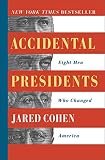
Consider Accidental Presidents by Jared Cohen. Recommended by 10 sources.
“Accidental Presidents offers eight narrative portraits of men who succeeded to the U.S. presidency without election, using anecdote-rich scenes and readable context to show how personality and circumstance interact with office power. It’s strongest as a set of self-contained stories that make succession stakes concrete for non-specialist readers; it does not prioritize dense archival argument or exhaustive methodology, so expect some interpretive generalizations and repeated themes across cases. Use it for fast historical orientation rather than scholarly deep-dives.”

Each recommendation is collected from a public source — interviews, articles, or curated lists — and linked to its original URL. Books with many verifiable recommendations from respected people rank higher.