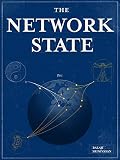
How To Start a New Country
by Balaji Srinivasan
Recommended by 4 notable people, including Naval Ravikant and Marc Andreessen
Check price on AmazonRecommended by public sources
Amazon availability
See customer reviews on Amazon →An energetic, argumentative book that mixes startup playbook tactics with political speculation about building ‘network states’ from online communities. Its useful part is practical-sounding maneuvers and an expansive frame for imagining how digital-first communities might scale into physical governance. Its main limitation is speculative leaps and repeated manifesto-style rhetoric that leave legal, logistical, and moral gaps; readers seeking sober, evidence-heavy policy analysis or granular legal templates will find it thin. Lacks hands-on exercises or step-by-step legal blueprints.
This summary and audience guidance are AI-generated from the book's description and its recommendation history, last updated May 2026. Recommendations, quotes and sources elsewhere on this page come from published material and are not generated.
Technology, has enabled us to start new companies, new communities, and new currencies. But can we use it to start new cities, or even new countries This book explains how to build the successor to the nation state, a concept we call the network state.This book introduces the concept of the network state: a country you can start from your computer,...
Difficulty:hard
Check formats, pricing, and availability options for Kindle, physical print, or audiobooks directly.
View available editions on AmazonWhy recommended
Recommended by 7 sources and appears in Most Recommended Books.
People and public figures who have recommended this book.
Recommendation proof is sourced from public posts, interviews, reading lists, and cited references.
Check formats, pricing, and availability options directly on Amazon.
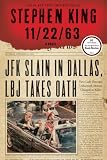
Consider 11/22/63 by Stephen King. Recommended by 4 sources.
“Starts as a lean, suspenseful time-travel premise that quickly settles into an immersive, character-focused saga. Its chief useful part is the way everyday 1960s small-town life and personal relationships make the historical stakes feel immediate; the novel rewards readers who relish atmosphere and slow moral puzzles. The main limitation is length and digressions—long domestic passages and episodic subplots stretch the middle and can undercut urgency for readers who wanted a tighter thriller.”
Each recommendation is collected from a public source — interviews, articles, or curated lists — and linked to its original URL. Books with many verifiable recommendations from respected people rank higher.