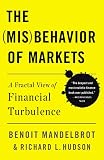
A Fractal View of Financial Turbulence
by Benoit Mandelbrot
Proof-backed recommendation
Amazon availability
Mandelbrot argues that markets behave more like jagged coastlines than smooth bell curves, mixing visual metaphors, historical market anecdotes, and substantive mathematics to sketch an alternative vocabulary for extreme events and fat tails. The reading alternates accessible, provocative passages with denser technical sections that formalize self-similarity and heavy-tailed distributions; the reward is a shift in how you frame risk. Main limitation: the math-heavy stretches and selective examples can feel dense and occasionally arcane, so practical, prescriptive traders may feel shortchanged.
This summary and audience guidance are AI-generated from the book's description and its recommendation history, last updated June 2026. Recommendations, quotes and sources elsewhere on this page come from published material and are not generated.
Benoit B. Mandelbrot, one of the century's most influential mathematicians, is worldfamous for making mathematical sense of a fact everybody knows but that geometers from Euclid on down had never assimilated: Clouds are not round, mountains are not cones, coastlines are not smooth. To these classic lines we can now add another example: Markets are...
Difficulty:hard
Check formats, pricing, and availability options for Kindle, physical print, or audiobooks directly.
View available editions on AmazonWhy recommended
Recommended by 3 sources and appears in Most Recommended Books, Finance, and Business.
People and public figures who have recommended this book.
Recommendation proof is sourced from public posts, interviews, reading lists, and cited references.
Tren Griffin
“I met Mandelbrot only once at this lecture at before he passed away in 2010. He wrote the book "The Misbehavior of Markets: A Fractal View of Financial Turbulence." I suggest you read this book for yourself (even though it is not an easy book to read).”
Check formats, pricing, and availability options directly on Amazon.
Consider The Undoing Project by Michael Lewis. Recommended by 18 sources.
“Michael Lewis chronicles the friendship and intellectual partnership of Daniel Kahneman and Amos Tversky, who championed the idea that cognitive biases shape our choices. The narrative reads like a buddy story, weaving their discoveries into personal anecdotes and the drama of their collaboration. You'll grasp key ideas—loss aversion, framing—through their story, but the book focuses on biography, not application. Helpful for understanding behavioral economics' origins; less useful if you want actionable advice. The emotional arc of their relationship can overshadow the science.”


Each recommendation is collected from a public source — interviews, articles, or curated lists — and linked to its original URL. Books with many verifiable recommendations from respected people rank higher.