The Choice
Embrace the Possible
by Edith Eva Eger
2 more
More Recommenders
“Maybe the best book I?ve read in years. The true story of a young Hungarian girl sent to Auschwitz where her parents are murdered upon arrival but who manages to survive a year of torture and starvation before being liberated. After the war she moves to America, gets a PhD in psychology, and becomes a therapist who understands the psychology of trauma better than anyone. Just epic writing and storytelling, hard to put down. | There are few books I’ve read that personally embrace the idea of #growthmindset (without using that term in the book) more than this one. It is a memoir forged on the foundation of forgiveness, resilience, autonomy, and generosity. | This book is partly a memoir and partly a guide to processing trauma. Eger was only sixteen years old when she and her family got sent to Auschwitz. After surviving unbelievable horrors, she moved to the United States and became a therapist. Her unique background gives her amazing insight, and I think many people will find comfort right now from her suggestions on how to handle difficult situations. | What were the best books you read in 2017 Very interested in your opinions as I am always looking for good books to read. Here are some of my choices; books by Michael Walker, @DouglasKMurray, Dr Jean Twenge and Dr Edith Eger.”
Source →“Maybe the best book I?ve read in years. The true story of a young Hungarian girl sent to Auschwitz where her parents are murdered upon arrival but who manages to survive a year of torture and starvation before being liberated. After the war she moves to America, gets a PhD in psychology, and becomes a therapist who understands the psychology of trauma better than anyone. Just epic writing and storytelling, hard to put down. | There are few books I’ve read that personally embrace the idea of #growthmindset (without using that term in the book) more than this one. It is a memoir forged on the foundation of forgiveness, resilience, autonomy, and generosity. | This book is partly a memoir and partly a guide to processing trauma. Eger was only sixteen years old when she and her family got sent to Auschwitz. After surviving unbelievable horrors, she moved to the United States and became a therapist. Her unique background gives her amazing insight, and I think many people will find comfort right now from her suggestions on how to handle difficult situations. | What were the best books you read in 2017 Very interested in your opinions as I am always looking for good books to read. Here are some of my choices; books by Michael Walker, @DouglasKMurray, Dr Jean Twenge and Dr Edith Eger.”
Source →Recommended by 4 notable people, including Bill Gates and Morgan Housel
Check price on AmazonProof-backed recommendation
Amazon availability
Reading Profile
Should I read this?
Reading The Choice feels like sitting with a survivor who moves between vivid wartime recollections and later-life reflections about choosing to live. Its strongest value is the combination of scene-level testimony — specific memories that anchor the horror — with plainspoken exhortations about resilience that many readers find galvanizing. The main limitation is a tonal flip: the book alternates narrative with prescriptive passages, and readers expecting a detached history may find the advice-driven sections repetitive or too conversational for sustained historical analysis.
Read this if...
- •a high-school history teacher building a Holocaust unit who wants a readable, human testimony to assign and a memoir that yields classroom discussion points about memory and moral choice
- •a family caregiver or relative trying to understand how survivors narrate life after trauma and looking for accessible, personal reflections rather than academic analysis
- •a book-group organizer seeking an emotionally direct memoir that supplies both vivid scenes and explicit topics to debate (memory, responsibility, resilience)
Skip this if...
- •you'll likely put it down when the narrative shifts into repeated exhortations about 'choice'—readers wanting a steady, chronologically detailed history may lose patience at those prescriptive stretches
- •annoying if you prefer footnoted, source-driven history or academic context—the book prioritizes personal memory and reflection over archival analysis
- •lose interest if you avoid graphic, emotionally intense descriptions of violence and suffering—the early wartime passages are detailed and can be draining
A New York Times Bestseller ?I?ll be forever changed by Dr. Eger?s story?The Choice is a reminder of what courage looks like in the worst of times and that we all have the ability to pay attention to what we?ve lost, or to pay attention to what we still have.??Oprah ?Dr. Eger?s life reveals our capacity to transcend even the greatest of horrors and...
Before You Buy
Reading Specifications
Difficulty:medium
Audience Fit
- a high-school history teacher building a Holocaust unit who wants a readable, human testimony to assign and a memoir that yields classroom discussion points about memory and moral choice
- a family caregiver or relative trying to understand how survivors narrate life after trauma and looking for accessible, personal reflections rather than academic analysis
- a book-group organizer seeking an emotionally direct memoir that supplies both vivid scenes and explicit topics to debate (memory, responsibility, resilience)
- you'll likely put it down when the narrative shifts into repeated exhortations about 'choice'—readers wanting a steady, chronologically detailed history may lose patience at those prescriptive stretches
- annoying if you prefer footnoted, source-driven history or academic context—the book prioritizes personal memory and reflection over archival analysis
- lose interest if you avoid graphic, emotionally intense descriptions of violence and suffering—the early wartime passages are detailed and can be draining
Check formats, pricing, and availability options for Kindle, physical print, or audiobooks directly.
View available editions on AmazonKey themes
Why recommended
Recommended by 4 sources and appears in Autobiographies, Holocaust, and Psychology.
Recommended by notable people
People and public figures who have recommended this book.
Recommendation Signals
Recommendation proof is sourced from public posts, interviews, reading lists, and cited references.
Jonathan Sacks
“Maybe the best book I?ve read in years. The true story of a young Hungarian girl sent to Auschwitz where her parents are murdered upon arrival but who manages to survive a year of torture and starvation before being liberated. After the war she moves to America, gets a PhD in psychology, and becomes a therapist who understands the psychology of trauma better than anyone. Just epic writing and storytelling, hard to put down. | There are few books I’ve read that personally embrace the idea of #growthmindset (without using that term in the book) more than this one. It is a memoir forged on the foundation of forgiveness, resilience, autonomy, and generosity. | This book is partly a memoir and partly a guide to processing trauma. Eger was only sixteen years old when she and her family got sent to Auschwitz. After surviving unbelievable horrors, she moved to the United States and became a therapist. Her unique background gives her amazing insight, and I think many people will find comfort right now from her suggestions on how to handle difficult situations. | What were the best books you read in 2017 Very interested in your opinions as I am always looking for good books to read. Here are some of my choices; books by Michael Walker, @DouglasKMurray, Dr Jean Twenge and Dr Edith Eger.”
View sources (4) ▾80%
Appears In

Not sure if this is the right fit?
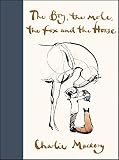
Consider The Boy, the Mole, the Fox and the Horse by Charlie Mackesy. Recommended by 8 sources.
“Soft-spoken, heavily illustrated fable built from short dialogues and watercolor sketches. Each spread pairs a spare line of text with a loose drawing, so the pleasure is visual and aphoristic rather than narrative; readers collect felt-true sentences more than plot. Most useful when you want quick consolations, a prompt for conversation with a child, or a pause during a rough day. Limiting if you want sustained argument, concrete advice, or tightly plotted storytelling: the repetition of gentleness can feel sentimental or thin after a while.”
Similar books

The Boy, the Mole, the Fox and the Horse
Charlie Mackesy
The World as It Is
Ben Rhodes
Out of Control
Kevin Kelly
The Bully Pulpit
Doris Kearns Goodwin
The Seven Spiritual Laws of Success
Deepak Chopra
Billions and Billions
Carl Sagan
Anger
Gary ChapmanFactfulness
Hans RoslingHow recommendation signals are reviewed
Each recommendation is collected from a public source — interviews, articles, or curated lists — and linked to its original URL. Books with many verifiable recommendations from respected people rank higher.