BookMentionsBookMentions
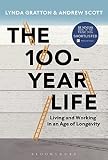
The 100-Year Life
3 recommendations

The 100-Year Life

Living and Working in an Age of Longevity

by Lynda Gratton

Recommended by Chip Conley and Theodora Lau

Recommended by Chip Conley and Theodora Lau

Check price on Amazon

Proof-backed recommendation

Amazon availability

Reading Profile

Difficulty:easy
Themes:three-stage career vs multi-stage lifefinancial planning vs lifelong learning

Should I read this?

Practical and readable, The 100-Year Life takes the demographic fact of longer lifespans and turns it into scenario-driven advice about careers, education, and savings. Strength lies in concrete scenarios and checklists that help test alternative life-stage plans and retraining paths. Annoyances include repeated anecdotes and a managerial 'plan-and-act' tone that reiterates similar points across chapters. It emphasizes individual planning over structural or policy answers, so it's best used by skimming to chapters that match immediate decisions rather than reading straight through.

Read this if...

  • a mid-career corporate manager (late 30s–50s) facing redundancy or stagnation who needs language and practical steps to map new career stages and retraining paths
  • an early-career professional (20s–30s) deciding whether to take on debt for more schooling or build flexible skills, who wants concrete scenarios showing how longer working lives change education trade-offs
  • an HR or benefits lead at a medium-to-large company planning programs for an aging workforce, looking for conversation starters and practical ideas to propose multi-stage career support

Skip this if...

  • you'll likely put it down when the same life-stage examples and exhortations repeat—midway through the book the repetition intensifies and can feel slogging
  • annoying if you prefer deep policy analysis or class-sensitive nuance; the tone leans toward individual planning rather than structural solutions
  • avoid if you wanted step-by-step exercises or templates—this book lacks hands-on exercises

What will your 100year life look likeDoes the thought of working for 60 or 70 years fill you with dread Or can you see the potential for a more stimulating future as a result of having so much extra timeMany of us have been raised on the traditional notion of a threestage approach to our working lives: education, followed by work and then reti...

Before You Buy

Reading Specifications

Difficulty:easy

Themes:
three-stage career vs multi-stage lifefinancial planning vs lifelong learningsecurity vs experimentation

Audience Fit

Recommended for:
  • a mid-career corporate manager (late 30s–50s) facing redundancy or stagnation who needs language and practical steps to map new career stages and retraining paths
  • an early-career professional (20s–30s) deciding whether to take on debt for more schooling or build flexible skills, who wants concrete scenarios showing how longer working lives change education trade-offs
  • an HR or benefits lead at a medium-to-large company planning programs for an aging workforce, looking for conversation starters and practical ideas to propose multi-stage career support
Not ideal if you want:
  • you'll likely put it down when the same life-stage examples and exhortations repeat—midway through the book the repetition intensifies and can feel slogging
  • annoying if you prefer deep policy analysis or class-sensitive nuance; the tone leans toward individual planning rather than structural solutions
  • avoid if you wanted step-by-step exercises or templates—this book lacks hands-on exercises

Check formats, pricing, and availability options for Kindle, physical print, or audiobooks directly.

View available editions on Amazon

Key themes

three-stage career vs multi-stage lifefinancial planning vs lifelong learningsecurity vs experimentationindividual responsibility vs structural constrain…short-term gigs vs long careers

Why recommended

Recommended by 3 sources and appears in Most Recommended Books, Health, and Finance.

Recommended by notable people

People and public figures who have recommended this book.

Recommendation Signals

Recommendation proof is sourced from public posts, interviews, reading lists, and cited references.

T

Theodora Lau

@PaultheBanker_ @Kasasa @leimer @Clagett Ah yes Love that book changed my perspective a few years ago as well. | A really interesting, observational book.
View sources (2) ▾80%

Appears In

The Undoing Project
Try This Instead

Not sure if this is the right fit?

Consider The Undoing Project by Michael Lewis. Recommended by 18 sources.

Michael Lewis chronicles the friendship and intellectual partnership of Daniel Kahneman and Amos Tversky, who championed the idea that cognitive biases shape our choices. The narrative reads like a buddy story, weaving their discoveries into personal anecdotes and the drama of their collaboration. You'll grasp key ideas—loss aversion, framing—through their story, but the book focuses on biography, not application. Helpful for understanding behavioral economics' origins; less useful if you want actionable advice. The emotional arc of their relationship can overshadow the science.

Similar books

How recommendation signals are reviewed

Each recommendation is collected from a public source — interviews, articles, or curated lists — and linked to its original URL. Books with many verifiable recommendations from respected people rank higher.

The 100-Year Life

The 100-Year Life

View on Amazon →