BookMentionsBookMentions
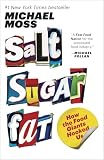
Salt Sugar Fat
3 recommendations

Salt Sugar Fat

How the Food Giants Hooked Us

by Michael Moss

Recommended by Scott Adams and Sharon Hayes

Recommended by Scott Adams and Sharon Hayes

Check price on Amazon

Proof-backed recommendation

Amazon availability

Reading Profile

Difficulty:medium
Themes:palatability engineeringprofit vs public health

Should I read this?

Salt Sugar Fat reads like long-form investigative journalism. It connects lab tricks, marketing tactics, and calorie-saturated products to explain why processed foods dominate modern diets. Its most useful material is the reportage: clear data, factory and industry anecdotes, and concrete examples that help you spot engineered palatability. Limitations: the narrative repeats similar revelations and sometimes tilts toward indignation rather than solutions, so readers wanting short how-to guidance or tight summarization may find it drawn-out.

Read this if...

  • a parent packing school lunches who wants vivid examples to explain processed-food ingredients—useful now to identify pantry items driven by engineered taste rather than nutrition
  • a health educator preparing a community presentation who needs concrete industry anecdotes and data to make abstract food-system mechanics understandable for an audience
  • a food journalist or policy analyst gathering background on product design and marketing tactics—good source material and reporting leads to follow up

Skip this if...

  • you'll likely put it down when recurring factory/marketing scenes and the same statistics repeat across chapters—momentum stalls in the middle if you want fresh insights every chapter
  • annoying if you want step-by-step behavior change or recipes—no hands-on exercises or quick-action checklist
  • annoying if you prefer detached academic tone; the writing can feel moralizing and one-sided, which frustrates readers seeking neutral, multi-perspective analysis

Every year, the average American eats 33 pounds of cheese and 70 pounds of sugar. They ingest 8,500 milligrams of salt a day, double the recommended amount, almost none of which comes from salt shakers. It comes from processed food, an industry that hauls in $1 trillion in annual sales. In Salt Sugar Fat, Pulitzer Prizewinning investigative report...

Before You Buy

Reading Specifications

Difficulty:medium

Themes:
palatability engineeringprofit vs public healthmarketing science vs consumer health

Audience Fit

Recommended for:
  • a parent packing school lunches who wants vivid examples to explain processed-food ingredients—useful now to identify pantry items driven by engineered taste rather than nutrition
  • a health educator preparing a community presentation who needs concrete industry anecdotes and data to make abstract food-system mechanics understandable for an audience
  • a food journalist or policy analyst gathering background on product design and marketing tactics—good source material and reporting leads to follow up
Not ideal if you want:
  • you'll likely put it down when recurring factory/marketing scenes and the same statistics repeat across chapters—momentum stalls in the middle if you want fresh insights every chapter
  • annoying if you want step-by-step behavior change or recipes—no hands-on exercises or quick-action checklist
  • annoying if you prefer detached academic tone; the writing can feel moralizing and one-sided, which frustrates readers seeking neutral, multi-perspective analysis

Check formats, pricing, and availability options for Kindle, physical print, or audiobooks directly.

View available editions on Amazon

Key themes

palatability engineeringprofit vs public healthmarketing science vs consumer healthanecdote vs data emphasislabeling transparency vs product design

Why recommended

Recommended by 3 sources and appears in Nutrition, Most Recommended Books, and Food.

Recommended by notable people

People and public figures who have recommended this book.

Recommendation Signals

Recommendation proof is sourced from public posts, interviews, reading lists, and cited references.

S

Scott Adams

@evaneugenescott @MLeeJohnson @HawkofNewYork Food preferences come largely from the food, not from the people. I have cravings for chocolate until I stay away from it long enough to realize it wasn't my free will making me eat it, just a chemically induced addiction. See Sugar, Fat, Salt book. | @novenator @andrewmarsh6 @williamorr2110 @EmmaKinery Fat alone doesn't cause obesity. Excess calories do. This is science. There's a fantastic book called "Salt Sugar Fat" that looks at what the food industry does to get consumers hooked.
View sources (2) ▾80%

Appears In

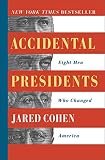
Accidental Presidents
Try This Instead

Not sure if this is the right fit?

Consider Accidental Presidents by Jared Cohen. Recommended by 10 sources.

Accidental Presidents offers eight narrative portraits of men who succeeded to the U.S. presidency without election, using anecdote-rich scenes and readable context to show how personality and circumstance interact with office power. It’s strongest as a set of self-contained stories that make succession stakes concrete for non-specialist readers; it does not prioritize dense archival argument or exhaustive methodology, so expect some interpretive generalizations and repeated themes across cases. Use it for fast historical orientation rather than scholarly deep-dives.

Similar books

How recommendation signals are reviewed

Each recommendation is collected from a public source — interviews, articles, or curated lists — and linked to its original URL. Books with many verifiable recommendations from respected people rank higher.

Salt Sugar Fat

Salt Sugar Fat

View on Amazon →