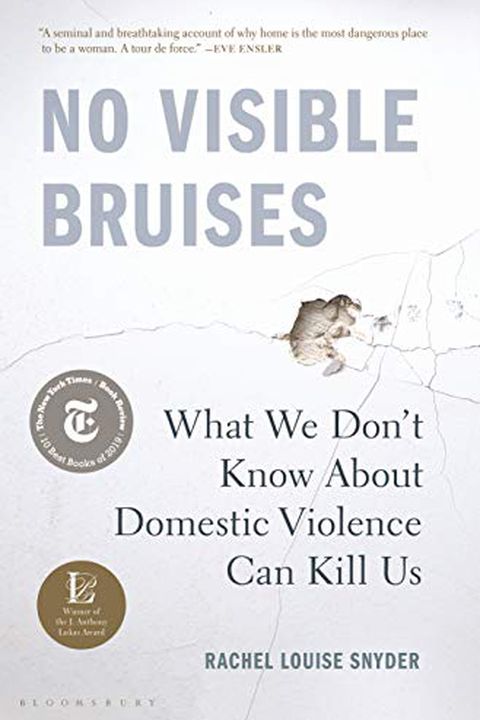
What We Don?t Know About Domestic Violence Can Kill Us
by Rachel Louise Snyder
Recommended by Terry Crews
Check price on AmazonProof-backed recommendation
Amazon availability
Rachel Louise Snyder delivers immersive investigative reporting that stitches survivor testimony, scene-by-scene police and court accounts, and institutional detail into a portrait of how domestic abuse intersects with public life. The most useful part is the human-scale stories that make systemic gaps tangible for non-specialist readers and policymakers. The book's limitations are emotional repetitiveness—similar cases recur—and a focus on exposure rather than practical next steps; readers seeking detached analysis or step-by-step guidance may feel the narrative leaves unresolved questions.
This summary and audience guidance are AI-generated from the book's description and its recommendation history, last updated May 2026. Recommendations, quotes and sources elsewhere on this page come from published material and are not generated.
An awardwinning journalist's intimate investigation of the true scope of domestic violence, revealing how the roots of America's most pressing social crises are buried in abuse that happens behind closed doors. We call it domestic violence. We call it private violence. Sometimes we call it intimate terrorism. But whatever we call it, we generally ...
Difficulty:hard
Check formats, pricing, and availability options for Kindle, physical print, or audiobooks directly.
View available editions on AmazonWhy recommended
Recommended by 1 source and appears in Sociology, Psychology, and Social Sciences.
People and public figures who have recommended this book.
Recommendation proof is sourced from public posts, interviews, reading lists, and cited references.
Terry Crews
American businessperson and board member, Retired Chief Financial Officer, Monsanto
“TERRY’S BOOK CLUB: NO VISIBLE BRUISES by RACHEL LOUISE SNYDER @rlswrites rlswrites and incredible book on what defines domestic violence, and how it is often hidden or misnomered in far more heinous crimes. I can…”
Check formats, pricing, and availability options directly on Amazon.
Consider Outliers by Malcolm Gladwell. Recommended by 31 sources.
“Outliers reads like a series of captivating magazine profiles, each unpacking a hidden factor behind extraordinary success. Gladwell’s storytelling makes complex social science accessible, but the book relies on memorable anecdotes rather than offering systematic analysis. The book explores the idea that individual brilliance rarely stands alone; success often hinges on birth dates, cultural legacies, and the 10,000-hour rule. While the narratives are strong, the book overgeneralizes from handpicked examples, leaving skeptical readers questioning the conclusions. It’s most useful as a conversation starter about luck and timing—annoying if you want a rigorous academic treatise or a how-to guide for your own life.”

Each recommendation is collected from a public source — interviews, articles, or curated lists — and linked to its original URL. Books with many verifiable recommendations from respected people rank higher.