BookMentionsBookMentions
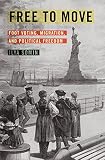
Free to Move
3 recommendations

Free to Move

Foot Voting, Migration, and Political Freedom

by Ilya Somin

Recommended by Tyler Cowen and Michael Clemens

Recommended by Tyler Cowen and Michael Clemens

Check price on Amazon

Proof-backed recommendation

Amazon availability

Reading Profile

Difficulty:hard
Themes:ballot-box voting vs foot votingignorance incentives vs mobility incentives

Should I read this?

This argumentative, policy-focused read starts briskly with clear cases and legal reasoning that push 'voting with your feet'—choosing jurisdictions or relocating—as a practical check on political power. Useful sections lay out concrete proposals and persuasive examples for anyone rethinking political accountability through mobility. Friction shows in the middle: many limitations are sketched rather than documented, and the book sidesteps deep empirical surveys, moving-costs analysis, and step-by-step implementation. That tone will frustrate readers expecting data-heavy balance or operational policy playbooks.

Read this if...

  • a city planner negotiating zoning and residency policy in a mid-size metro who needs arguments about how mobility shapes local political accountability and inter-jurisdictional competition
  • a law or public-policy student drafting a paper on exit versus voice who wants concise examples and a clear normative frame to support an essay
  • a policy analyst at a housing or urban institute evaluating reform options who wants testable ideas about how relocation options might change citizens' incentives

Skip this if...

  • you'll likely put it down when the same 'voting with your feet' advantage is restated without deep engagement with moving costs, inequality, or enforcement hurdles
  • annoying if you prefer dense empirical documentation—this leans on argument and illustrative examples rather than long statistical chapters
  • not a fit if you want step-by-step implementation manuals or detailed operational policy playbooks—offers proposals but few procedural details

Ballot box voting is often considered the essence of political freedom. But, it has two major shortcomings: individual voters have little chance of making a difference, and they also face strong incentives to remain ignorant about the issues at stake. "Voting with your feet," however, avoids both of these pitfalls and offers a wider range of choice...

Before You Buy

Reading Specifications

Difficulty:hard

Themes:
ballot-box voting vs foot votingignorance incentives vs mobility incentiveslocal choice vs national uniformity

Audience Fit

Recommended for:
  • a city planner negotiating zoning and residency policy in a mid-size metro who needs arguments about how mobility shapes local political accountability and inter-jurisdictional competition
  • a law or public-policy student drafting a paper on exit versus voice who wants concise examples and a clear normative frame to support an essay
  • a policy analyst at a housing or urban institute evaluating reform options who wants testable ideas about how relocation options might change citizens' incentives
Not ideal if you want:
  • you'll likely put it down when the same 'voting with your feet' advantage is restated without deep engagement with moving costs, inequality, or enforcement hurdles
  • annoying if you prefer dense empirical documentation—this leans on argument and illustrative examples rather than long statistical chapters
  • not a fit if you want step-by-step implementation manuals or detailed operational policy playbooks—offers proposals but few procedural details

Check formats, pricing, and availability options for Kindle, physical print, or audiobooks directly.

View available editions on Amazon

Key themes

ballot-box voting vs foot votingignorance incentives vs mobility incentiveslocal choice vs national uniformityexit vs voicemobility vs redistribution constraints

Why recommended

Recommended by 3 sources and appears in Most Recommended Books.

Recommended by notable people

People and public figures who have recommended this book.

Recommendation Signals

Recommendation proof is sourced from public posts, interviews, reading lists, and cited references.

M

Michael Clemens

I found this thesis original and compelling. There’s a book length treatment too, here—> | That is the new, forthcoming book by my colleague Ilya Somin, due out in May. It is the best book on geographic mobility and exit that has been written to date, and thus I am happy to recommend it heartily.
View sources (2) ▾80%

Appears In

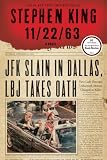
11/22/63
Try This Instead

Not sure if this is the right fit?

Consider 11/22/63 by Stephen King. Recommended by 4 sources.

Starts as a lean, suspenseful time-travel premise that quickly settles into an immersive, character-focused saga. Its chief useful part is the way everyday 1960s small-town life and personal relationships make the historical stakes feel immediate; the novel rewards readers who relish atmosphere and slow moral puzzles. The main limitation is length and digressions—long domestic passages and episodic subplots stretch the middle and can undercut urgency for readers who wanted a tighter thriller.

Similar books

How recommendation signals are reviewed

Each recommendation is collected from a public source — interviews, articles, or curated lists — and linked to its original URL. Books with many verifiable recommendations from respected people rank higher.

Free to Move

Free to Move

View on Amazon →