BookMentionsBookMentions
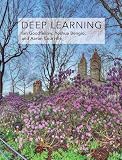
Deep Learning
10 recommendations

Deep Learning

by Ian Goodfellow

Recommended by Nassim Nicholas Taleb, Elon Musk +
4 more

More Recommenders

V

Distilled News: A Gentle Introduction to Deep Learning – [Part 1 ~ Introduction] I am starting this blog to share my understanding of this amazing book Deep Learning that is written by Ian Goodfellow, Yoshua Bengio and Aaron Cournville. I just started… | For a slightly more technical read on AI.

Source →
S

Distilled News: A Gentle Introduction to Deep Learning – [Part 1 ~ Introduction] I am starting this blog to share my understanding of this amazing book Deep Learning that is written by Ian Goodfellow, Yoshua Bengio and Aaron Cournville. I just started… | For a slightly more technical read on AI.

Source →
C

Distilled News: A Gentle Introduction to Deep Learning – [Part 1 ~ Introduction] I am starting this blog to share my understanding of this amazing book Deep Learning that is written by Ian Goodfellow, Yoshua Bengio and Aaron Cournville. I just started… | For a slightly more technical read on AI.

Source →
C

Distilled News: A Gentle Introduction to Deep Learning – [Part 1 ~ Introduction] I am starting this blog to share my understanding of this amazing book Deep Learning that is written by Ian Goodfellow, Yoshua Bengio and Aaron Cournville. I just started… | For a slightly more technical read on AI.

Source →

Recommended by 6 notable people, including Nassim Nicholas Taleb and Elon Musk

Check price on Amazon

Proof-backed recommendation

Amazon availability

Reading Profile

Difficulty:hard
Themes:mathematical derivations vs applied intuitionoptimization theory vs architecture heuristics

Should I read this?

Equation-forward introduction covering probability, linear-algebra foundations, optimization methods, model families, and common architectures. Sections trade short conceptual summaries for formal derivations and algorithm descriptions; occasional practical notes appear but runnable code is rare. Most useful for building a technical picture of why methods behave as they do and for informed follow-up experimentation. Main limitation: dense notation and extended proofs demand slow, focused study, so readers seeking hands-on walkthroughs will be left wanting.

Read this if...

  • a graduate student starting machine-learning research who needs mathematical grounding and a map of topics to choose a thesis direction — this book supplies derivations and terminology to read research papers with less confusion
  • a software engineer moving into an ML role at a product company who must explain model failure modes and trade-offs to teammates — the text links equations to algorithmic behavior useful for technical discussions
  • a data scientist evaluating modeling approaches for production systems who wants math-grounded comparisons of optimization, capacity, and generalization rather than heuristic checklists

Skip this if...

  • you'll likely put it down when long derivations and dense notation accumulate without immediate runnable examples; if you prefer learn-by-doing tutorials, this is where interest fades
  • annoying if you prefer narrative case studies, product stories, or intuition-first explanations — the tone is technical and formal rather than anecdotal
  • not for absolute beginners without calculus, linear algebra, and probability background — you'll spend more time relearning math than absorbing the machine-learning material

An introduction to a broad range of topics in deep learning, covering mathematical and conceptual background, deep learning techniques used in industry, and research perspectives. Deep learning is a form of machine learning that enables computers to learn from experience and understand the world in terms of a hierarchy of concepts. Because the comp...

Before You Buy

Reading Specifications

Difficulty:hard

Themes:
mathematical derivations vs applied intuitionoptimization theory vs architecture heuristicsbreadth of topics vs per-topic depth

Audience Fit

Recommended for:
  • a graduate student starting machine-learning research who needs mathematical grounding and a map of topics to choose a thesis direction — this book supplies derivations and terminology to read research papers with less confusion
  • a software engineer moving into an ML role at a product company who must explain model failure modes and trade-offs to teammates — the text links equations to algorithmic behavior useful for technical discussions
  • a data scientist evaluating modeling approaches for production systems who wants math-grounded comparisons of optimization, capacity, and generalization rather than heuristic checklists
Not ideal if you want:
  • you'll likely put it down when long derivations and dense notation accumulate without immediate runnable examples; if you prefer learn-by-doing tutorials, this is where interest fades
  • annoying if you prefer narrative case studies, product stories, or intuition-first explanations — the tone is technical and formal rather than anecdotal
  • not for absolute beginners without calculus, linear algebra, and probability background — you'll spend more time relearning math than absorbing the machine-learning material

Check formats, pricing, and availability options for Kindle, physical print, or audiobooks directly.

View available editions on Amazon

Key themes

mathematical derivations vs applied intuitionoptimization theory vs architecture heuristicsbreadth of topics vs per-topic depthcapacity vs generalization

Why recommended

Recommended by 10 sources and appears in Neural Networks, Neural Network, and Deep Learning.

Recommended by notable people

People and public figures who have recommended this book.

Recommendation Signals

Recommendation proof is sourced from public posts, interviews, reading lists, and cited references.

S

Satya Nadella

Distilled News: A Gentle Introduction to Deep Learning – [Part 1 ~ Introduction] I am starting this blog to share my understanding of this amazing book Deep Learning that is written by Ian Goodfellow, Yoshua Bengio and Aaron Cournville. I just started… | For a slightly more technical read on AI.
View sources (3) ▾80%

Appears In

AI Superpowers
Try This Instead

Not sure if this is the right fit?

Consider AI Superpowers by Kaifu Lee. Recommended by 20 sources.

This book reads like a well-connected technologist’s urgent TED talk, blending personal career story, startup anecdotes, and macro predictions. What works best is a clear, alarm-bell view of China’s rapid AI rise and the coming job displacement, with tangible data and sector breakdowns. You’ll likely find it useful as a conversation starter or trend snapshot. But it often oversimplifies complex geopolitical and ethical tensions into a binary rivalry, and the determined optimism can feel boosterish. The tone may grate if you prefer nuanced, academic treatments or worry about the author’s business interests shaping the narrative.

Similar books

How recommendation signals are reviewed

Each recommendation is collected from a public source — interviews, articles, or curated lists — and linked to its original URL. Books with many verifiable recommendations from respected people rank higher.

Deep Learning

Deep Learning

View on Amazon →