China, Silicon Valley, and the New World Order
by Kaifu Lee
More Recommenders
American politician

American author and entrepreneur
Recommended by 12 notable people, including Arianna Huffington and Alfred Lin
Check price on AmazonRecommended by public sources
Amazon availability
See customer reviews on Amazon →This book reads like a well-connected technologist’s urgent TED talk, blending personal career story, startup anecdotes, and macro predictions. What works best is a clear, alarm-bell view of China’s rapid AI rise and the coming job displacement, with tangible data and sector breakdowns. You’ll likely find it useful as a conversation starter or trend snapshot. But it often oversimplifies complex geopolitical and ethical tensions into a binary rivalry, and the determined optimism can feel boosterish. The tone may grate if you prefer nuanced, academic treatments or worry about the author’s business interests shaping the narrative.
This summary and audience guidance are AI-generated from the book's description and its recommendation history, last updated May 2026. Recommendations, quotes and sources elsewhere on this page come from published material and are not generated.
Dr. Kai-Fu Lee - one of the world's most respected experts on AI and China - reveals that China has suddenly caught up to the US at an astonishingly rapid and unexpected pace. In AI SUPERPOWERS, Kai-fu Lee argues powerfully that because of these unprecedented developments in AI, dramatic changes will be happening much sooner than many of us expected. Indeed, as the US-Sino AI competition begins to heat up, Lee urges the US and China to both accept and to embrace the great responsibilities that come with significant technological power. Most experts already say that AI will have a devastating impact on blue-collar jobs. But Lee predicts that Chinese and American AI will have a strong impact…
Difficulty:easy
Check formats, pricing, and availability options for Kindle, physical print, or audiobooks directly.
View available editions on AmazonWhy recommended
Recommended by 20 sources and appears in Technology, Art, and Business.
People and public figures who have recommended this book.
Recommendation proof is sourced from public posts, interviews, reading lists, and cited references.
Check formats, pricing, and availability options directly on Amazon.
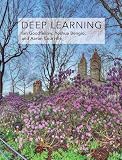
Consider Deep Learning by Ian Goodfellow. Recommended by 10 sources.
“Equation-forward introduction covering probability, linear-algebra foundations, optimization methods, model families, and common architectures. Sections trade short conceptual summaries for formal derivations and algorithm descriptions; occasional practical notes appear but runnable code is rare. Most useful for building a technical picture of why methods behave as they do and for informed follow-up experimentation. Main limitation: dense notation and extended proofs demand slow, focused study, so readers seeking hands-on walkthroughs will be left wanting.”
Each recommendation is collected from a public source — interviews, articles, or curated lists — and linked to its original URL. Books with many verifiable recommendations from respected people rank higher.