BookMentionsBookMentions
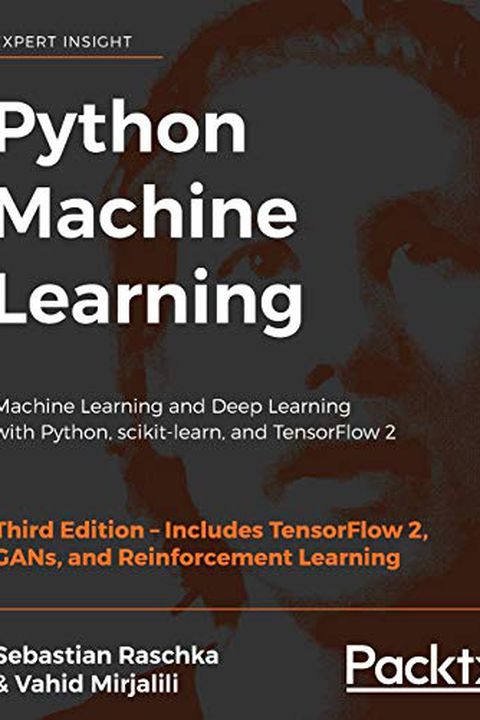
Python Machine Learning
2 recommendations

Python Machine Learning

Machine Learning and Deep Learning with Python, scikitlearn, and TensorFlow 2, 3rd Edition

by Sebastian Raschka

Recommended by Kirk Borne and Craig Brown

Recommended by Kirk Borne and Craig Brown

Check price on Amazon

Proof-backed recommendation

Amazon availability

Reading Profile

Difficulty:hard
Themes:python code vs conceptsrunnable notebooks vs condensed exposition

Should I read this?

Python Machine Learning pairs concise algorithm descriptions with runnable Python examples and a linked GitHub repository. Early chapters are directly practical if you follow the notebooks; later sections compress derivations and long code walkthroughs that demand slower, hands-on reading. The clearest payoff comes from adapting the examples to your own data rather than passive skimming. Expect a utilitarian finish: usable code snippets and clearer implementation patterns, but not a gentle, classroom-style sequence of exercises.

Read this if...

  • a backend software engineer building an MVP who needs runnable model code to prototype product features quickly — the book's Python examples and linked notebooks let you spin up tests and iterate fast.
  • a graduate student running small experiments who wants ready scripts and notebooks to reproduce algorithms and compare tweaks rather than only abstract derivations.
  • a data analyst at a mid-size company shifting from spreadsheets to models who needs concrete, example-driven demonstrations to try on internal datasets and learn the tooling pipeline.

Skip this if...

  • you'll likely put it down when chapters move into compact equations and long implementation detail — readers wanting a breezy, high-level overview lose interest at that point.
  • annoying if you prefer step-by-step classroom exercises and worked problem sets rather than runnable examples to adapt and extend; the book lacks guided exercise sets.
  • not a good fit if you want a language-agnostic, implementation-free treatment; the text is framed around Python tooling and concrete libraries.

Link to the GitHub Repository containing the code examples and additional material: https://github.com/rasbt/pythonmachi...Many of the most innovative breakthroughs and exciting new technologies can be attributed to applications of machine learning. We are living in an age where data comes in abundance, and thanks to the selflearning algorithms f...

Before You Buy

Reading Specifications

Difficulty:hard

Themes:
python code vs conceptsrunnable notebooks vs condensed expositionimplementation detail vs conceptual overview

Audience Fit

Recommended for:
  • a backend software engineer building an MVP who needs runnable model code to prototype product features quickly — the book's Python examples and linked notebooks let you spin up tests and iterate fast.
  • a graduate student running small experiments who wants ready scripts and notebooks to reproduce algorithms and compare tweaks rather than only abstract derivations.
  • a data analyst at a mid-size company shifting from spreadsheets to models who needs concrete, example-driven demonstrations to try on internal datasets and learn the tooling pipeline.
Not ideal if you want:
  • you'll likely put it down when chapters move into compact equations and long implementation detail — readers wanting a breezy, high-level overview lose interest at that point.
  • annoying if you prefer step-by-step classroom exercises and worked problem sets rather than runnable examples to adapt and extend; the book lacks guided exercise sets.
  • not a good fit if you want a language-agnostic, implementation-free treatment; the text is framed around Python tooling and concrete libraries.

Check formats, pricing, and availability options for Kindle, physical print, or audiobooks directly.

View available editions on Amazon

Key themes

python code vs conceptsrunnable notebooks vs condensed expositionimplementation detail vs conceptual overviewpractical prototyping vs theoretical depthalgorithm math vs applied examples

Why recommended

Recommended by 2 sources and appears in Python, Machine Learning, and Data Science.

Recommended by notable people

People and public figures who have recommended this book.

Recommendation Signals

Recommendation proof is sourced from public posts, interviews, reading lists, and cited references.

C

Craig Brown

Expert Insight Book on Machine Learning: Python Machine Learning Second Edition by Sebastian Raschka & Vahid Mirjalili The first edition of this book, is a balance of classical ideas and modern insights into machine… #DataScience #BigDataAnalytics #AI | Tips & Tutorials on How to Learn #MachineLearning in 10 Days: by @rasbt ————— #BigData #DataScience #AI #NeuralNetworks #DataMining #Tensorflow #DeepLearning #DataScientists ——— ++Must see his comprehensive #Python #Coding book:
View sources (2) ▾80%

Appears In

AI Superpowers
Try This Instead

Not sure if this is the right fit?

Consider AI Superpowers by Kaifu Lee. Recommended by 20 sources.

This book reads like a well-connected technologist’s urgent TED talk, blending personal career story, startup anecdotes, and macro predictions. What works best is a clear, alarm-bell view of China’s rapid AI rise and the coming job displacement, with tangible data and sector breakdowns. You’ll likely find it useful as a conversation starter or trend snapshot. But it often oversimplifies complex geopolitical and ethical tensions into a binary rivalry, and the determined optimism can feel boosterish. The tone may grate if you prefer nuanced, academic treatments or worry about the author’s business interests shaping the narrative.

Similar books

How recommendation signals are reviewed

Each recommendation is collected from a public source — interviews, articles, or curated lists — and linked to its original URL. Books with many verifiable recommendations from respected people rank higher.

Python Machine Learning

Python Machine Learning

View on Amazon →