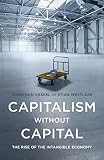
The Rise of the Intangible Economy
by Jonathan Haskel

Recommended by Bill Gates
Check price on AmazonProof-backed recommendation
Amazon availability
Jonathan Haskel traces the shift from physical capital to intangible investment—software, design, brands—and lays out the consequences for firm returns, market structure, and policy. Early chapters are readable and filled with useful ways to think about scale, spillovers, and valuation quirks; those parts are the most immediately practical for strategists and analysts. The main limitation is a mid-book plunge into measurement and accounting debates that slows the pace and feels technical; it offers diagnosis more than actionable step-by-step advice.
This summary and audience guidance are AI-generated from the book's description and its recommendation history, last updated June 2026. Recommendations, quotes and sources elsewhere on this page come from published material and are not generated.
Early in the twenty-first century, a quiet revolution occurred. For the first time, the major developed economies began to invest more in intangible assets, like design, branding, and software, than in tangible assets, like machinery, buildings, and computers. For all sorts of businesses, the ability to deploy assets that one can neither see nor to...
Difficulty:hard
Check formats, pricing, and availability options for Kindle, physical print, or audiobooks directly.
View available editions on AmazonWhy recommended
Recommended by 2 sources and appears in Most Recommended Books, Finance, and Business.
People and public figures who have recommended this book.
Recommendation proof is sourced from public posts, interviews, reading lists, and cited references.
Bill Gates
Co-founder of Microsoft; co-chair of the Gates Foundation
“The book is eye opening, but it’s not for everyone. Although Haskel and Westlake are good about explaining things, you need some familiarity with economics to follow what they’re saying. If you’ve taken an economics course or regularly read the finance section of the Economist, however, you shouldn’t have any trouble following their arguments.”
Check formats, pricing, and availability options directly on Amazon.
Consider The Undoing Project by Michael Lewis. Recommended by 18 sources.
“Michael Lewis chronicles the friendship and intellectual partnership of Daniel Kahneman and Amos Tversky, who championed the idea that cognitive biases shape our choices. The narrative reads like a buddy story, weaving their discoveries into personal anecdotes and the drama of their collaboration. You'll grasp key ideas—loss aversion, framing—through their story, but the book focuses on biography, not application. Helpful for understanding behavioral economics' origins; less useful if you want actionable advice. The emotional arc of their relationship can overshadow the science.”


Each recommendation is collected from a public source — interviews, articles, or curated lists — and linked to its original URL. Books with many verifiable recommendations from respected people rank higher.