BookMentionsBookMentions
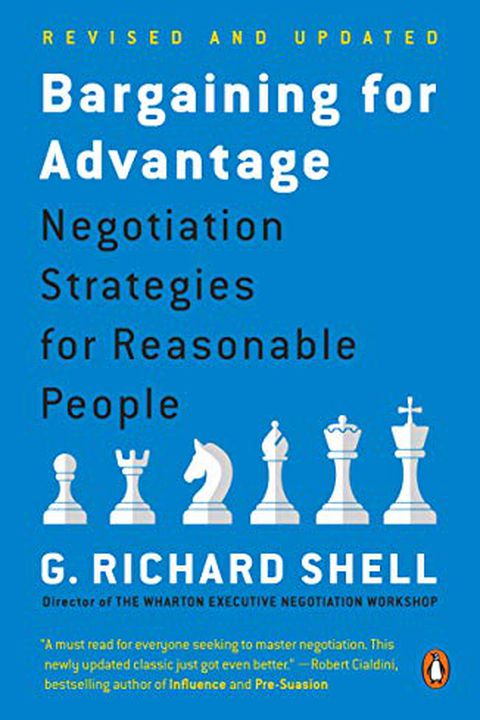
Bargaining for Advantage

Bargaining for Advantage

Negotiation Strategies for Reasonable People

by G. Richard Shell

Check price on Amazon

Proof-backed recommendation

Amazon availability

Reading Profile

Difficulty:easy
Themes:preparation vs improvisationpositional bargaining vs interest-based moves

Should I read this?

Shell lays out a systematic, step-by-step negotiation playbook drawn from his Wharton workshop: self-assessment of style, preparation routines, tactical moves, and bargaining scripts backed by business examples. What works best is a portable set of practices you can apply to supplier deals, hiring, or pitch negotiations. The main limitation is a sometimes formulaic, checklist-heavy delivery that can feel repetitive and narrow; readers seeking high-level theory, narrative case studies, or cultural nuance may find it dry and prescriptive.

Read this if...

  • corporate procurement manager about to renegotiate supplier contracts — needs concrete prep steps, BATNA thinking, and concession sequencing to protect margin and deadlines
  • startup founder preparing term-sheet talks with investors — wants clear tactics for leverage, trade-offs, and closing practical agreements under time pressure
  • HR leader handling executive compensation or counteroffers — looking for stepwise negotiation routines and scripts to keep talks professional and defensible

Skip this if...

  • you'll likely put it down when chapter-after-chapter of tactical checklists and stepwise templates repeats similar moves without fresh framing
  • annoying if you prefer story-driven books or memoir-style lessons — this is technique-first, not character-first
  • not a fit if you want deep cross-cultural or ethical debate about bargaining styles; the focus stays on business tactics rather than philosophical or sociological nuance

As director of the renowned Wharton Executive Negotiation Workshop, Professor G. Richard Shell has taught thousands of business leaders, administrators, and other professionals how to survive and thrive in the sometimes roughandtumble world of negotiation. His systematic, stepbystep approach comes to life in this book, which is available in ove...

Before You Buy

Reading Specifications

Difficulty:easy

Themes:
preparation vs improvisationpositional bargaining vs interest-based movesstandardized steps vs individual style

Audience Fit

Recommended for:
  • corporate procurement manager about to renegotiate supplier contracts — needs concrete prep steps, BATNA thinking, and concession sequencing to protect margin and deadlines
  • startup founder preparing term-sheet talks with investors — wants clear tactics for leverage, trade-offs, and closing practical agreements under time pressure
  • HR leader handling executive compensation or counteroffers — looking for stepwise negotiation routines and scripts to keep talks professional and defensible
Not ideal if you want:
  • you'll likely put it down when chapter-after-chapter of tactical checklists and stepwise templates repeats similar moves without fresh framing
  • annoying if you prefer story-driven books or memoir-style lessons — this is technique-first, not character-first
  • not a fit if you want deep cross-cultural or ethical debate about bargaining styles; the focus stays on business tactics rather than philosophical or sociological nuance

Check formats, pricing, and availability options for Kindle, physical print, or audiobooks directly.

View available editions on Amazon

Key themes

preparation vs improvisationpositional bargaining vs interest-based movesstandardized steps vs individual styleshort-term gain vs long-term relationshipstactics vs reputation management

Why recommended

appears in Negotiation, Management, and Business.

Recommendation Signals

Recommendation proof is sourced from public posts, interviews, reading lists, and cited references.

No verified recommendation proof available yet.

Appears In

Influence
Try This Instead

Not sure if this is the right fit?

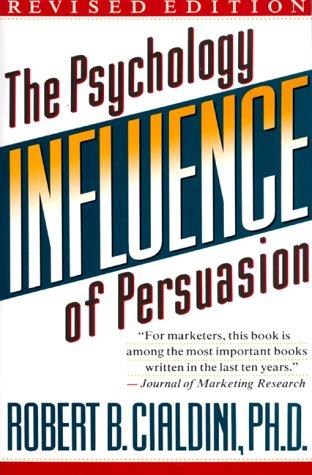
Consider Influence by Robert Cialdini. Recommended by 16 sources.

This is a book that pulls apart the psychological shortcuts we use to make decisions, then shows how to deploy them in business contexts. The writing is clear and heavy on real-world examples from sales and marketing, which makes the principles stick but can leave you feeling like you’ve just taken a master class in manipulation. Its useful part is giving a language for the invisible forces that shape everyday choices. The main limitation: it can feel overly tactical, as if relationships are just a series of triggers to be pulled, offering little on building genuine influence through trust.

Similar books

How recommendation signals are reviewed

Each recommendation is collected from a public source — interviews, articles, or curated lists — and linked to its original URL. Books with many verifiable recommendations from respected people rank higher.

Bargaining for Advantage

Bargaining for Advantage

View on Amazon →