BookMentionsBookMentions
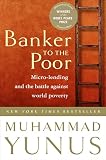
Banker to the Poor
2 recommendations

Banker to the Poor

MicroLending and the Battle Against World Poverty

by Muhammad Yunus

Recommended by The Barefoot Investor and Hugh Jackman

Check price on Amazon

Proof-backed recommendation

Amazon availability

Reading Profile

Difficulty:hard
Themes:microcredit vs structural povertyindividual loans vs community solidarity

Should I read this?

First-person, anecdote-rich narrative that follows Yunus and the early Grameen Bank experiments, mixing operational detail with portraits of borrowers and grassroots problem-solving. Useful for getting a tangible sense of how microloans were delivered, the group-lending mechanics, and the personal conviction that drove the project. Limitation: recurring anecdotes and a consistently optimistic, sometimes polemical tone mean the book glosses over hard quantitative critique and can feel repetitive; readers wanting systematic, data-heavy evaluation will find it thin.

Read this if...

  • an NGO program manager piloting a microloan scheme in a low-income region — wants concrete stories of borrower behavior, group-lending logistics, and common field obstacles to anticipate practical pitfalls now
  • an MBA or social-entrepreneurship student writing a case study on mission-driven finance — needs founder narrative and firsthand operational choices to illustrate how a social financial institution scales from local experiments
  • a municipal or regional economic-development official exploring small-loan partnerships for informal workers — seeks clear examples of outreach, repayment practices, and community-based mechanisms to judge feasibility for local pilots

Skip this if...

  • you want up-to-date, rigorous empirical analysis — the book is narrative and operational, not a statistics-first evaluation
  • you prefer detached, neutral scholarship — Yunus writes with conviction and moral urgency, which reads as partisan to some
  • you'll likely put it down when the same borrower vignettes and implementation minutiae recur across chapters; also no exercises or hands-on templates if you wanted practical step-by-step tools

Muhammad Yunus is that rare thing: a bona fide visionary. His dream is the total eradication of poverty from the world. In 1983, against the advice of banking and government officials, Yunus established Grameen, a bank devoted to providing the poorest of Bangladesh with minuscule loans. Grameen Bank, based on the belief that credit is a basic human...

Before You Buy

Reading Specifications

Difficulty:hard

Themes:
microcredit vs structural povertyindividual loans vs community solidaritymission zeal vs bureaucratic resistance

Audience Fit

Recommended for:
  • an NGO program manager piloting a microloan scheme in a low-income region — wants concrete stories of borrower behavior, group-lending logistics, and common field obstacles to anticipate practical pitfalls now
  • an MBA or social-entrepreneurship student writing a case study on mission-driven finance — needs founder narrative and firsthand operational choices to illustrate how a social financial institution scales from local experiments
  • a municipal or regional economic-development official exploring small-loan partnerships for informal workers — seeks clear examples of outreach, repayment practices, and community-based mechanisms to judge feasibility for local pilots
Not ideal if you want:
  • you want up-to-date, rigorous empirical analysis — the book is narrative and operational, not a statistics-first evaluation
  • you prefer detached, neutral scholarship — Yunus writes with conviction and moral urgency, which reads as partisan to some
  • you'll likely put it down when the same borrower vignettes and implementation minutiae recur across chapters; also no exercises or hands-on templates if you wanted practical step-by-step tools

Check formats, pricing, and availability options for Kindle, physical print, or audiobooks directly.

View available editions on Amazon

Key themes

microcredit vs structural povertyindividual loans vs community solidaritymission zeal vs bureaucratic resistancestorytelling vs data-skepticismlocal practice vs global ambition

Why recommended

Recommended by 2 sources and appears in Economic Development, Entrepreneur, and Finance.

Recommended by notable people

People and public figures who have recommended this book.

Recommendation Signals

Recommendation proof is sourced from public posts, interviews, reading lists, and cited references.

H

Hugh Jackman

Recommended this book

30%
T

The Barefoot Investor

Recommended this book

30%

Appears In

The Undoing Project
Try This Instead

Not sure if this is the right fit?

Consider The Undoing Project by Michael Lewis. Recommended by 18 sources.

Michael Lewis chronicles the friendship and intellectual partnership of Daniel Kahneman and Amos Tversky, who championed the idea that cognitive biases shape our choices. The narrative reads like a buddy story, weaving their discoveries into personal anecdotes and the drama of their collaboration. You'll grasp key ideas—loss aversion, framing—through their story, but the book focuses on biography, not application. Helpful for understanding behavioral economics' origins; less useful if you want actionable advice. The emotional arc of their relationship can overshadow the science.

Similar books

How recommendation signals are reviewed

Each recommendation is collected from a public source — interviews, articles, or curated lists — and linked to its original URL. Books with many verifiable recommendations from respected people rank higher.

Banker To The Poor

Banker to the Poor

View on Amazon →