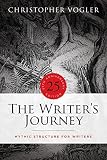
Mythic Structure for Writers
by Christopher Vogler
Recommended by 3 notable people, including James Gunn and Darren Aronofsky
Check price on AmazonRecommended by public sources
Amazon availability
See customer reviews on Amazon →The Writers Journey hands you a repeatable map of stages and archetypal roles that many writers use to plot or reshape stories. Chapters are concise and practical, followed by film and prose examples that show the beats in action. What works best is a usable set of plotting tools you can apply while drafting; the main limitation is a prescriptive tone and repeated examples that can feel dated or formulaic. Not a hands-on workbook — more reference than exercises.
This summary and audience guidance are AI-generated from the book's description and its recommendation history, last updated June 2026. Recommendations, quotes and sources elsewhere on this page come from published material and are not generated.
"Writers are storytellers. The best of them have utilized the principles of myth to create masterful stories that are dramatic, entertaining and psychologically true. Based on the work of Joseph Campbell, this edition provides an insider's look at how writers (both fiction and nonfiction) can utilize mythic structure to create powerful narratives....
Difficulty:hard
Check formats, pricing, and availability options for Kindle, physical print, or audiobooks directly.
View available editions on AmazonWhy recommended
Recommended by 5 sources and appears in Filmmaking, Best Books on Writing, and Most Recommended Books.
People and public figures who have recommended this book.
Recommendation proof is sourced from public posts, interviews, reading lists, and cited references.
Check formats, pricing, and availability options directly on Amazon.

Consider The Hero with a Thousand Faces by Joseph Campbell. Recommended by 14 sources.
“Campbell’s work reads like a dense academic tour through world mythology, cataloging the hero’s journey in exhausting detail. You’ll encounter countless myths, rituals, and symbols tied to a common monomyth pattern. The main value lies in its ability to unveil the deep structure beneath disparate stories, from ancient epics to modern dreams. Annoyingly, the prose is thick with Jungian and Freudian interpretation, and the comparative method can feel repetitive and overreaching. It’s a book to study, not to skim—rewarding for the patient, cloying for the skeptical.”
Each recommendation is collected from a public source — interviews, articles, or curated lists — and linked to its original URL. Books with many verifiable recommendations from respected people rank higher.