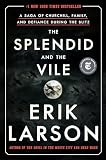
A Saga of Churchill, Family, and Defiance During the Blitz
by Erik Larson
More Recommenders
Recommended by 5 notable people, including Bill Gates and Keith Rabois
Check price on AmazonRecommended by public sources
Amazon availability
See customer reviews on Amazon →Larson builds a scene-by-scene portrait of Britain’s first year under relentless bombing, mixing government meetings, street-level chaos and household responses into cinematic prose. Its useful part is sensory immediacy: the book conveys what nights of air raids felt like and how ordinary routines bent under pressure. The main limitation is a vignette-heavy approach that privileges atmosphere over broad analysis, so readers wanting structural explanations of strategy may grow impatient. Treat it as immersive narrative history rather than a tactical or analytical primer.
This summary and audience guidance are AI-generated from the book's description and its recommendation history, last updated May 2026. Recommendations, quotes and sources elsewhere on this page come from published material and are not generated.
On Winston Churchill's first day as prime minister, Adolf Hitler invaded Holland and Belgium. Poland and Czechoslovakia had already fallen, and the Dunkirk evacuation was just two weeks away. For the next twelve months, Hitler would wage a relentless bombing campaign, killing 45,000 Britons. It was up to Churchill to hold his country together and p...
Difficulty:hard
Check formats, pricing, and availability options for Kindle, physical print, or audiobooks directly.
View available editions on AmazonWhy recommended
Recommended by 8 sources and appears in Most Recommended Books, History, and Nonfiction.
People and public figures who have recommended this book.
Recommendation proof is sourced from public posts, interviews, reading lists, and cited references.
Check formats, pricing, and availability options directly on Amazon.
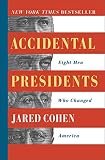
Consider Accidental Presidents by Jared Cohen. Recommended by 10 sources.
“Accidental Presidents offers eight narrative portraits of men who succeeded to the U.S. presidency without election, using anecdote-rich scenes and readable context to show how personality and circumstance interact with office power. It’s strongest as a set of self-contained stories that make succession stakes concrete for non-specialist readers; it does not prioritize dense archival argument or exhaustive methodology, so expect some interpretive generalizations and repeated themes across cases. Use it for fast historical orientation rather than scholarly deep-dives.”
Each recommendation is collected from a public source — interviews, articles, or curated lists — and linked to its original URL. Books with many verifiable recommendations from respected people rank higher.