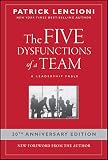
The Five Dysfunctions of a Team
A Leadership Fable
by Patrick Lencioni
4 more
More Recommenders
“22/ The Five Dysfunctions of a Team. @patricklencioni in an engaging narrative illustrates problems that can debilitate a team’s performance. Solutions will necessarily be situationspecific, but he gives helpful approaches. Thanks to @LilaGraceRose for recommending Lencioni. | The Five Dysfunctions of a Team by Patrick Lencioni. A classic book that talks about how to recognize and resolve dysfunctional team relationships. You can get most of the value from the framework at the end, but the case study helps to remember it. | There's another great element of high performing teams that I really like. Which is this pyramid that was created by Patrick Lencioni, and he wrote this book, “The Five Dysfunctions of a Team.” And the reason this is interesting is he talks about the breakdowns of the team. A lot of teams break down because they have no trust and even if you had trust, why do you need trust If you have trust, you can actually have debates and conflict and get to the right answer. If you don't have conflicts and debate, it's the blind leading the blind. How do you actually know you got to the right answer before you commit to something So people are not actually wanting to commit, they're afraid of committing.”
Source →“22/ The Five Dysfunctions of a Team. @patricklencioni in an engaging narrative illustrates problems that can debilitate a team’s performance. Solutions will necessarily be situationspecific, but he gives helpful approaches. Thanks to @LilaGraceRose for recommending Lencioni. | The Five Dysfunctions of a Team by Patrick Lencioni. A classic book that talks about how to recognize and resolve dysfunctional team relationships. You can get most of the value from the framework at the end, but the case study helps to remember it. | There's another great element of high performing teams that I really like. Which is this pyramid that was created by Patrick Lencioni, and he wrote this book, “The Five Dysfunctions of a Team.” And the reason this is interesting is he talks about the breakdowns of the team. A lot of teams break down because they have no trust and even if you had trust, why do you need trust If you have trust, you can actually have debates and conflict and get to the right answer. If you don't have conflicts and debate, it's the blind leading the blind. How do you actually know you got to the right answer before you commit to something So people are not actually wanting to commit, they're afraid of committing.”
Source →Recommended by 6 notable people, including Sophie Bakalar and Alfred Lin
Check price on AmazonProof-backed recommendation
Amazon availability
Should I read this?
Recommended by 6 sources and appears in Hiring Recruiting, Management, and Project Management.
In The Five Dysfunctions of a Team Patrick Lencioni once again offers a leadership fable that is as enthralling and instructive as his first two bestselling books, The Five Temptations of a CEO and The Four Obsessions of an Extraordinary Executive. This time, he turns his keen intellect and storytelling power to the fascinating, complex world of t...
Looking for Kindle, hardcover, paperback, or audiobook editions?
Check formats, pricing, and current availability directly.
Why recommended
Recommended by 6 sources and appears in Hiring Recruiting, Management, and Project Management.
Recommended by notable people
People and public figures who have recommended this book.
Recommendation Signals
Recommendation proof is sourced from public posts, interviews, reading lists, and cited references.
Sophie Bakalar
“22/ The Five Dysfunctions of a Team. @patricklencioni in an engaging narrative illustrates problems that can debilitate a team’s performance. Solutions will necessarily be situationspecific, but he gives helpful approaches. Thanks to @LilaGraceRose for recommending Lencioni. | The Five Dysfunctions of a Team by Patrick Lencioni. A classic book that talks about how to recognize and resolve dysfunctional team relationships. You can get most of the value from the framework at the end, but the case study helps to remember it. | There's another great element of high performing teams that I really like. Which is this pyramid that was created by Patrick Lencioni, and he wrote this book, “The Five Dysfunctions of a Team.” And the reason this is interesting is he talks about the breakdowns of the team. A lot of teams break down because they have no trust and even if you had trust, why do you need trust If you have trust, you can actually have debates and conflict and get to the right answer. If you don't have conflicts and debate, it's the blind leading the blind. How do you actually know you got to the right answer before you commit to something So people are not actually wanting to commit, they're afraid of committing.”
View sources (3) ▾80%
Appears In
Not sure if this is the right fit?
Consider Good to Great by Jim Collins. Recommended by 32 sources.
“The book walks you through a multi-year research project, contrasting spectacular performers with mere survivors. The core insight—that sustained greatness hinges on disciplined people, thought, and action—feels sturdy and actionable. But the book’s arguments rely on retrospective selection of companies, and some of its darlings later faltered. You’ll find a methodical, almost monastic tone that rewards patience but may irritate if you want contemporary, tech-savvy lessons.”
Similar books
How recommendation signals are reviewed
Each recommendation is collected from a public source — interviews, articles, or curated lists — and linked to its original URL. Books with many verifiable recommendations from respected people rank higher.