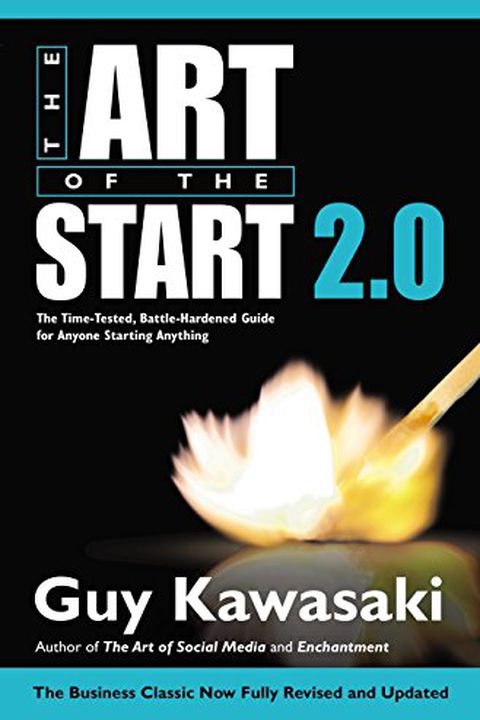
The TimeTested, BattleHardened Guide for Anyone Starting Anything
by Guy Kawasaki
More Recommenders
“For a firsttime entrepreneur: Art of the Start by Guy Kawasaki is an excellent introduction to many key issues.”
Recommended by 3 notable people, including Ev Williams and Keith Rabois
Check price on AmazonProof-backed recommendation
Amazon availability
See customer reviews on Amazon →This is a rapid-fire, opinionated guide that reads like a long TED talk. Kawasaki delivers short, punchy chapters packed with bullet points, aphorisms, and reusable slides. What works best is a comprehensive checklist of things to consider when starting a venture—from crafting a pitch to managing cash flow. However, its breadth means depth is sacrificed; some sections feel like repurposed blog posts, and the tone can grate if you're allergic to relentless positivity and Silicon Valley swagger.
This summary and audience guidance are AI-generated from the book's description and its recommendation history, last updated May 2026. Recommendations, quotes and sources elsewhere on this page come from published material and are not generated.
A new product, a new service, a new company, a new division, a new organization, a new anything?where there?s a will, here?s the way. It begins with a dream that just won?t quit, the onceinalifetime thunderbolt of pure inspiration, the obsession, the worldbeater, the killer app, the next big thing. Everyone who wants to make the world a better ...
Difficulty:easy
Check formats, pricing, and availability options for Kindle, physical print, or audiobooks directly.
View available editions on AmazonWhy recommended
Recommended by 4 sources and appears in Best Startup Books, Most Recommended Books, and Entrepreneurship.
People and public figures who have recommended this book.
Recommendation proof is sourced from public posts, interviews, reading lists, and cited references.

Keith Rabois
Technology executive and investor
“For a firsttime entrepreneur: Art of the Start by Guy Kawasaki is an excellent introduction to many key issues.”
Check formats, pricing, and availability options directly on Amazon.
Consider Accidental Presidents by Jared Cohen. Recommended by 10 sources.
“Accidental Presidents offers eight narrative portraits of men who succeeded to the U.S. presidency without election, using anecdote-rich scenes and readable context to show how personality and circumstance interact with office power. It’s strongest as a set of self-contained stories that make succession stakes concrete for non-specialist readers; it does not prioritize dense archival argument or exhaustive methodology, so expect some interpretive generalizations and repeated themes across cases. Use it for fast historical orientation rather than scholarly deep-dives.”

Each recommendation is collected from a public source — interviews, articles, or curated lists — and linked to its original URL. Books with many verifiable recommendations from respected people rank higher.