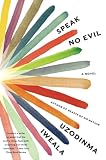
A Novel
by Uzodinma Iweala
Proof-backed recommendation
Amazon availability
Uzodinma Iweala’s Speak No Evil is a slim, high-tension novel that moves at a fast clip: spare sentences, close third-person focus, and scenes that accumulate pressure. What works best is its brutal intimacy — it maps the collision of queer desire, immigrant expectations, and familial secrecy in a few sharp episodes that linger after the last page. The main limitation: its intensity and moral tightness leave little room for comic relief or digression, so readers who want expansive backstory or emotional distance may feel boxed in.
This summary and audience guidance are AI-generated from the book's description and its recommendation history, last updated June 2026. Recommendations, quotes and sources elsewhere on this page come from published material and are not generated.
"A lovely slender volume that packs in entire worlds with complete mastery. Speak No Evil explains so much about our times and yet is never anything less than a scintillating, pageturning read."Gary Shteyngart "A wrenching, tightly woven story about many kinds of love and many kinds of violence. Speak No Evil probes deeply but also with compassion...
Difficulty:hard
Check formats, pricing, and availability options for Kindle, physical print, or audiobooks directly.
View available editions on AmazonWhy recommended
Recommended by 2 sources and appears in LGBTQ, Most Recommended Books, and Fiction.
People and public figures who have recommended this book.
Recommendation proof is sourced from public posts, interviews, reading lists, and cited references.
Ngozi Adichie
“A young Nigerian American comes out as gay, is a coming of age story about the difficult, churning mix of family expectations. It is elegant and elegiac, and evokes Washington DC with subtle power.”
Check formats, pricing, and availability options directly on Amazon.
Consider The Republic by Plato. Recommended by 13 sources.
“Plato stages an extended Socratic conversation that moves from concrete questions about justice into broad proposals about an ideal city, the structure of the soul, and what counts as reality and knowledge. Reading alternates brisk question-and-answer snippets with long, cumulative demonstrations that reward careful attention and annotation. Main value: a wealth of thought experiments for testing political and ethical intuitions. Main limitation: repetitive refutations, long policy sketches and dense metaphysical passages can feel abstruse and slow; patience and some philosophical background help.”
Each recommendation is collected from a public source — interviews, articles, or curated lists — and linked to its original URL. Books with many verifiable recommendations from respected people rank higher.