
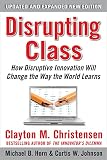
Disrupting Class
How Disruptive Innovation Will Change the Way the World Learns
by Clayton Christensen
Amazon availability
Reading Profile
Should I read this?
Disrupting Class reads like a strategist’s diagnosis of K–12 systems: clear, analytical chapters that mix data, case studies, and policy prescriptions. Its most useful contribution is translating business ideas — notably the 'Jobs to Be Done' perspective — into concrete suggestions for structuring technology-driven personalized learning at scale. The main limitation is a steady tilt toward market-based incentives and systemic models; readers seeking day-to-day classroom tactics or hands-on exercises will find little practical lesson planning and may grow impatient with repeated examples and implementation detail.
Read this if...
- •a school-district superintendent planning a pilot edtech initiative who needs language to explain system-level benefits and rollout trade-offs to a board
- •an edtech product manager working to position an adaptive-learning tool and looking for customer segmentation and 'job' angles to justify product features
- •a state education policy analyst drafting proposals for scaling personalized learning who wants case-based evidence and implementation levers to cite in policy drafts
Skip this if...
- •you'll likely put it down when chapters move into economic models, rollout logistics, and repeated case narratives — if you want quick classroom activities, this is the wrong fit
- •annoying if you prefer teacher-centered storytelling or practical lesson plans; the book leans toward market logic and system design rather than everyday pedagogy
- •no exercises — lacks hands-on classroom tools or worksheets; skip if you expected a how-to manual full of ready-to-use lesson plans
Clay Christensen's groundbreaking bestselling work in education now updated and expanded, including a new chapter on Christensen's seminal "Jobs to Be Done" theory applied to education. "Provocatively titled, Disrupting Class is just what America's K12 education system needsa well thoughtthrough proposal for using Technology, to better serve stu...
Before You Buy
Reading Specifications
Difficulty:hard
Audience Fit
- a school-district superintendent planning a pilot edtech initiative who needs language to explain system-level benefits and rollout trade-offs to a board
- an edtech product manager working to position an adaptive-learning tool and looking for customer segmentation and 'job' angles to justify product features
- a state education policy analyst drafting proposals for scaling personalized learning who wants case-based evidence and implementation levers to cite in policy drafts
- you'll likely put it down when chapters move into economic models, rollout logistics, and repeated case narratives — if you want quick classroom activities, this is the wrong fit
- annoying if you prefer teacher-centered storytelling or practical lesson plans; the book leans toward market logic and system design rather than everyday pedagogy
- no exercises — lacks hands-on classroom tools or worksheets; skip if you expected a how-to manual full of ready-to-use lesson plans
Check formats, pricing, and availability options for Kindle, physical print, or audiobooks directly.
View available editions on AmazonKey themes
Why recommended
appears in Education and Business.
Recommendation Signals
Recommendation proof is sourced from public posts, interviews, reading lists, and cited references.
No verified recommendation proof available yet.
Ready to read Disrupting Class?
Check formats, pricing, and availability options directly on Amazon.
Appears In
Not sure if this is the right fit?
Consider Outliers by Malcolm Gladwell. Recommended by 31 sources.
“Outliers reads like a series of captivating magazine profiles, each unpacking a hidden factor behind extraordinary success. Gladwell’s storytelling makes complex social science accessible, but the book relies on memorable anecdotes rather than offering systematic analysis. The book explores the idea that individual brilliance rarely stands alone; success often hinges on birth dates, cultural legacies, and the 10,000-hour rule. While the narratives are strong, the book overgeneralizes from handpicked examples, leaving skeptical readers questioning the conclusions. It’s most useful as a conversation starter about luck and timing—annoying if you want a rigorous academic treatise or a how-to guide for your own life.”
Similar books

How recommendation signals are reviewed
Each recommendation is collected from a public source — interviews, articles, or curated lists — and linked to its original URL. Books with many verifiable recommendations from respected people rank higher.