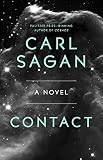
A Novel
by Carl Sagan
Recommended by David Priess
Check price on AmazonProof-backed recommendation
Amazon availability
Reading Contact feels like witnessing a carefully staged first-contact scenario: gripping opening discovery, a procedural build toward a single technological possibility, and sustained detours into politics, religion, and the public fallout of extraordinary news. The most useful part is how the plot lets scientific curiosity collide with bureaucratic caution and spiritual debate, forcing characters to argue practical choices. The main limitation is pacing—the book spends long stretches on debates and institutional maneuvering that will frustrate readers who wanted nonstop action.
This summary and audience guidance are AI-generated from the book's description and its recommendation history, last updated June 2026. Recommendations, quotes and sources elsewhere on this page come from published material and are not generated.
At first it seemed impossible a radio signal that came not from Earth but from far beyond the nearest stars. But then the signal was translated, and what had been impossible became terrifying. For the signal contains the information to build a Machine that can travel to the stars. A Machine that can take a human to meet those that sent the messag...
Difficulty:hard
Check formats, pricing, and availability options for Kindle, physical print, or audiobooks directly.
View available editions on AmazonWhy recommended
Recommended by 1 source and appears in Science Fiction, Science Fiction, and Science.
People and public figures who have recommended this book.
Recommendation proof is sourced from public posts, interviews, reading lists, and cited references.
David Priess
“Today?s 2 books on one topic: my two favorite published works by Carl Sagan. ?Contact? ?The DemonHaunted World: Science as a Candle in the Dark?”
Check formats, pricing, and availability options directly on Amazon.
Consider The Three-Body Problem by Cixin Liu. Recommended by 24 sources.
“This novel starts as a mystery rooted in a woman’s tragic experience during China’s Cultural Revolution, then spirals into a high-concept alien contact story built on intricate physics and game theory. The useful part lies in its audacious imagination: a three-body solar system, a virtual reality game, and a shocking revelation about humanity’s place in the universe. The limiting part may be its cold, analytical style and flat characters; emotion takes a backseat to ideas, and the scientific digressions can feel like lectures. It’s a slow burn that rewards intellectual curiosity but might alienate those craving warmth or narrative immediacy.”
Each recommendation is collected from a public source — interviews, articles, or curated lists — and linked to its original URL. Books with many verifiable recommendations from respected people rank higher.