
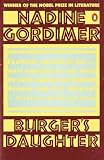
Burger's Daughter
by Nadine Gordimer
Reading Profile
Should I read this?
Burger's Daughter frames a woman's coming-to-terms with a revolutionary inheritance, moving between intimate memory and public argument. Gordimer's prose is steady and observant, rewarding close attention to interior detail set against a charged South African backdrop. Best moments come when private grief collides with political obligation, producing scenes richer than news accounts. Limiting stretches of political exposition and social background slow the pace, so readers seeking fast narrative propulsion or neat moral closure may feel stalled.
Read this if...
- •a graduate student researching 20th-century South African social life who wants a novelistic, interior sense of how political struggle reshapes family and identity — useful as textured background rather than a factual primer
- •an editor or writer working on a politically minded novel who wants to study balancing inward psychological detail with public argument — to see techniques for embedding history inside a personal arc
- •a community organizer raised in a politically active household who needs language to reflect on inherited obligations versus private desires — the book supplies scenes and phrases that map that conflict
Skip this if...
- •you'll likely put it down when long sections of political and social exposition interrupt the personal narrative and slow momentum; those stretches are the book's common drop-off point
- •annoying if you prefer plot-driven pacing or clear, tidy moral answers; the novel favors ambivalence and lingering doubt over decisive resolution
- •not suitable if you want practical takeaways or exercises — lacks hands-on exercises and is not a how-to or guide
As a depiction of South Africa, this novel is more revealing than a thousand news dispatches as it tells the story of a young woman cast in the role of a young revolutionary, trying to uphold a heritage handed on by martyred parents while carving out a sense of one's self....
Before You Buy
Reading Specifications
Difficulty:hard
Audience Fit
- a graduate student researching 20th-century South African social life who wants a novelistic, interior sense of how political struggle reshapes family and identity — useful as textured background rather than a factual primer
- an editor or writer working on a politically minded novel who wants to study balancing inward psychological detail with public argument — to see techniques for embedding history inside a personal arc
- a community organizer raised in a politically active household who needs language to reflect on inherited obligations versus private desires — the book supplies scenes and phrases that map that conflict
- you'll likely put it down when long sections of political and social exposition interrupt the personal narrative and slow momentum; those stretches are the book's common drop-off point
- annoying if you prefer plot-driven pacing or clear, tidy moral answers; the novel favors ambivalence and lingering doubt over decisive resolution
- not suitable if you want practical takeaways or exercises — lacks hands-on exercises and is not a how-to or guide
Check formats, pricing, and availability options for Kindle, physical print, or audiobooks directly.
View available editions on AmazonKey themes
Why recommended
Recommended by 2 sources and appears in Revolutions, Most Recommended Books, and Fiction.
Recommended by notable people
People and public figures who have recommended this book.
Recommendation Signals
Recommendation proof is sourced from public posts, interviews, reading lists, and cited references.
Nelson Mandela
“I read all the unbanned novels of Nadine Gordimer and learned a great deal about the white liberal sensibility.”
Ready to read Burger's Daughter?
Check formats, pricing, and availability options directly on Amazon.
Appears In
Not sure if this is the right fit?
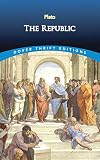
Consider The Republic by Plato. Recommended by 13 sources.
“Plato stages an extended Socratic conversation that moves from concrete questions about justice into broad proposals about an ideal city, the structure of the soul, and what counts as reality and knowledge. Reading alternates brisk question-and-answer snippets with long, cumulative demonstrations that reward careful attention and annotation. Main value: a wealth of thought experiments for testing political and ethical intuitions. Main limitation: repetitive refutations, long policy sketches and dense metaphysical passages can feel abstruse and slow; patience and some philosophical background help.”
Similar books

How recommendation signals are reviewed
Each recommendation is collected from a public source — interviews, articles, or curated lists — and linked to its original URL. Books with many verifiable recommendations from respected people rank higher.