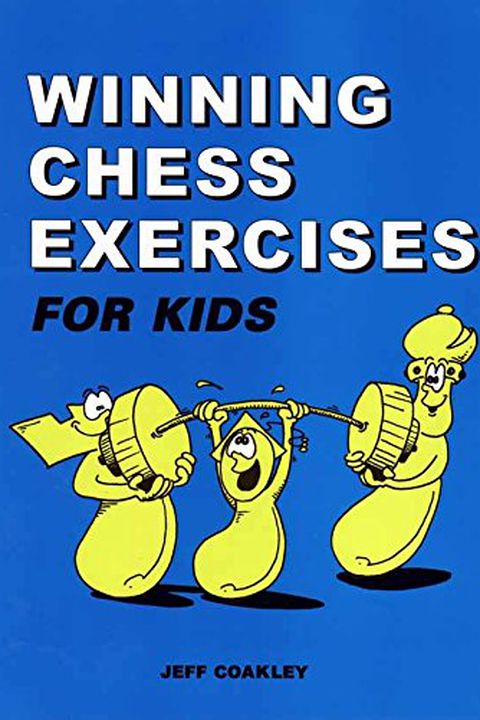
by Jeff Coakley
Recommended by public sources
Amazon availability
See customer reviews on Amazon →Bright, cartoon-strewn pages deliver short puzzles and bite-sized explanations aimed at young beginners, so the book feels more like play than formal instruction. What works best is the sheer number of progressive exercises that build pattern recognition and basic tactics through repetition and visual cues. Its main limitation is a light touch on deeper strategic explanation and annotated games, which makes it too simple for older or advancing juniors. Parents and coaches will often want supplemental, more structured material.
This summary and audience guidance are AI-generated from the book's description and its recommendation history, last updated May 2026. Recommendations, quotes and sources elsewhere on this page come from published material and are not generated.
This wonderfully entertaining book also happens to be quite effective. Everything any child will need to know about chess strategy and more is here in this book, which is well laid out and easy to follow. Part of the fun factor for kids is that the book is replete with cartoon images of chess characters to help make the learning experience more exc...
Difficulty:easy
Check formats, pricing, and availability options for Kindle, physical print, or audiobooks directly.
View available editions on AmazonWhy recommended
Recommended by 1 source and appears in Most Recommended Books.
Recommendation proof is sourced from public posts, interviews, reading lists, and cited references.
No verified recommendation proof available yet.
Check formats, pricing, and availability options directly on Amazon.
Consider My 60 Memorable Games by Bobby Fischer. Recommended by 2 sources.
Each recommendation is collected from a public source — interviews, articles, or curated lists — and linked to its original URL. Books with many verifiable recommendations from respected people rank higher.