BookMentionsBookMentions
We Wish to Inform You That Tomorrow We Will be Killed With Our Families
5 recommendations

We Wish to Inform You That Tomorrow We Will be Killed With Our Families

Stories from Rwanda

by Philip Gourevitch

Recommended by Lisa Ling, Edward Norton +
2 more

More Recommenders

B

DENOUNCING v. EXAMINING EVIL. I'm reminded of a line from Philip Gourevitch's great book, We Wish To Inform You That Tomorrow We Will Be Killed with Our Families."...the problem remains that denouncing evil is a far cry from doing good." | This meticulously account is told from both the Hutu and Tutsi perspectives and is impressively comprehensive. It is so well told, in fact, that I felt like I was there experiencing the horror with my own eyes.

Source →
E

DENOUNCING v. EXAMINING EVIL. I'm reminded of a line from Philip Gourevitch's great book, We Wish To Inform You That Tomorrow We Will Be Killed with Our Families."...the problem remains that denouncing evil is a far cry from doing good." | This meticulously account is told from both the Hutu and Tutsi perspectives and is impressively comprehensive. It is so well told, in fact, that I felt like I was there experiencing the horror with my own eyes.

Source →

Recommended by 4 notable people, including Lisa Ling and Edward Norton

Check price on Amazon

Proof-backed recommendation

Amazon availability

Reading Profile

Difficulty:hard
Themes:witness-testimony vs national narrative

Should I read this?

Philip Gourevitch reconstructs the Rwandan genocide through survivors' testimonies, perpetrator accounts, and on-the-ground reporting, delivering a close, often harrowing narrative that prioritizes human detail over abstract theorizing. What works best is its ability to make the scale and moral confusion of mass killing feel immediate without settling for simple explanations. Its limitation is that the book leans heavily on narrative scenes and individual stories, which can leave readers wanting more structural analysis or broader political context.

Read this if...

  • a graduate student in human rights preparing a seminar on eyewitness testimony who needs vivid, readable case material to discuss reliability, memory, and moral judgment
  • an investigative journalist covering post-conflict reporting who wants examples of weaving testimony, timelines, and scene-setting into a sustained narrative
  • a history teacher designing a module on late-20th-century Africa who needs emotionally immediate accounts to prompt classroom discussion about responsibility and memory

Skip this if...

  • you'll likely put it down when descriptions of brutality and repeated survivor accounts become relentless and emotionally draining
  • annoying if you prefer analytical, structural histories rather than scene-driven narrative and close human portraits
  • lose patience if you want even-handed, data-heavy policy critique—Gourevitch takes moral positions and foregrounds moral witnessing over detached neutrality

In April of 1994, the government of Rwanda called on everyone in the Hutu majority to kill everyone in the Tutsi minority. Over the next three months, 800,000 Tutsis were murdered in the most unambiguous case of genocide since Hitler's war against the Jews. Philip Gourevitch's haunting work is an anatomy of the killings in Rwanda, a vivid history o...

Before You Buy

Reading Specifications

Difficulty:hard

Themes:
witness-testimony vs national narrativeindividual perpetrators vs collective responsibilityjournalistic immediacy vs historical distance

Audience Fit

Recommended for:
  • a graduate student in human rights preparing a seminar on eyewitness testimony who needs vivid, readable case material to discuss reliability, memory, and moral judgment
  • an investigative journalist covering post-conflict reporting who wants examples of weaving testimony, timelines, and scene-setting into a sustained narrative
  • a history teacher designing a module on late-20th-century Africa who needs emotionally immediate accounts to prompt classroom discussion about responsibility and memory
Not ideal if you want:
  • you'll likely put it down when descriptions of brutality and repeated survivor accounts become relentless and emotionally draining
  • annoying if you prefer analytical, structural histories rather than scene-driven narrative and close human portraits
  • lose patience if you want even-handed, data-heavy policy critique—Gourevitch takes moral positions and foregrounds moral witnessing over detached neutrality

Check formats, pricing, and availability options for Kindle, physical print, or audiobooks directly.

View available editions on Amazon

Key themes

witness-testimony vs national narrativeindividual perpetrators vs collective responsibil…journalistic immediacy vs historical distancememory vs forgetting

Why recommended

Recommended by 5 sources and appears in Most Recommended Books, History, and Nonfiction.

Recommended by notable people

People and public figures who have recommended this book.

Recommendation Signals

Recommendation proof is sourced from public posts, interviews, reading lists, and cited references.

E

Edward Norton

DENOUNCING v. EXAMINING EVIL. I'm reminded of a line from Philip Gourevitch's great book, We Wish To Inform You That Tomorrow We Will Be Killed with Our Families."...the problem remains that denouncing evil is a far cry from doing good." | This meticulously account is told from both the Hutu and Tutsi perspectives and is impressively comprehensive. It is so well told, in fact, that I felt like I was there experiencing the horror with my own eyes.
View sources (2) ▾80%

Appears In

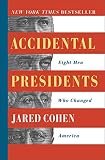
Accidental Presidents
Try This Instead

Not sure if this is the right fit?

Consider Accidental Presidents by Jared Cohen. Recommended by 10 sources.

Accidental Presidents offers eight narrative portraits of men who succeeded to the U.S. presidency without election, using anecdote-rich scenes and readable context to show how personality and circumstance interact with office power. It’s strongest as a set of self-contained stories that make succession stakes concrete for non-specialist readers; it does not prioritize dense archival argument or exhaustive methodology, so expect some interpretive generalizations and repeated themes across cases. Use it for fast historical orientation rather than scholarly deep-dives.

Similar books

How recommendation signals are reviewed

Each recommendation is collected from a public source — interviews, articles, or curated lists — and linked to its original URL. Books with many verifiable recommendations from respected people rank higher.

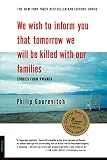
We Wish to Inform You That Tomorrow We Will be Killed With Our Families

We Wish to Inform You That Tomorrow We Will be Killed With Our Families

View on Amazon →