BookMentionsBookMentions
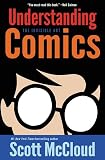
Understanding Comics
8 recommendations

Understanding Comics

The Invisible Art

by Scott Mccloud

Recommended by Ev Williams, Seth Godin +
4 more

More Recommenders

N

@99piorg @scottmccloud Understanding Comics is one of the most fascinating and clear works of criticism I’ve ever read. It is such an amazing book. I think about it all the time. And a seventh grader could grasp it without trouble. | Always recommend these books. | I have given away many, many copies.

Source →
B

@99piorg @scottmccloud Understanding Comics is one of the most fascinating and clear works of criticism I’ve ever read. It is such an amazing book. I think about it all the time. And a seventh grader could grasp it without trouble. | Always recommend these books. | I have given away many, many copies.

Source →
D

@99piorg @scottmccloud Understanding Comics is one of the most fascinating and clear works of criticism I’ve ever read. It is such an amazing book. I think about it all the time. And a seventh grader could grasp it without trouble. | Always recommend these books. | I have given away many, many copies.

Source →
J

@99piorg @scottmccloud Understanding Comics is one of the most fascinating and clear works of criticism I’ve ever read. It is such an amazing book. I think about it all the time. And a seventh grader could grasp it without trouble. | Always recommend these books. | I have given away many, many copies.

Source →

Recommended by 6 notable people, including Ev Williams and Seth Godin

Check price on Amazon

Proof-backed recommendation

Amazon availability

Reading Profile

Difficulty:hard
Themes:image vs wordclosure vs continuity

Should I read this?

Starts as a comic that teaches comics, using panels and diagrams to name mechanics such as closure and iconography. Its main usefulness is turning visual storytelling moves—spacing, panel shape, simplification—into immediately visible demonstrations you can look back at while making pages. Limits appear in repeated restatements and examples anchored in older comics traditions, which can read chatty or era-bound. Best read slowly and with the illustrated examples open in view rather than skimmed.

Read this if...

  • an early-career graphic novelist storyboarding a short book who needs a concrete, image-first vocabulary to judge pacing and panel-to-panel choices now
  • a visual-arts or writing instructor building a lesson on multimodal storytelling and wanting classroom-ready, illustrated explanations to show students
  • a motion designer converting sequential art into timing and beats who wants clearer rules-of-thumb for implied motion, rhythm, and panel-to-panel transition

Skip this if...

  • you'll likely put it down when long, text-heavy chapters repeat distinctions and move away from the playful panels into denser explanation — that mid-section slows noticeably
  • annoying if you prefer step-by-step tutorials or modern surveys of web-native comics and international scenes, since many references skew toward older print examples
  • not a fit if you want a practical industry manual or a current-market overview; this is more a concept-driven illustrated discussion than a contemporary trade guide

The bestselling international classic on storytelling and visual communication"You must read this book." — Neil GaimanPraised throughout the cartoon industry by such luminaries as Art Spiegelman, Matt Groening, and Will Eisner, Scott McCloud's Understanding Comics is a seminal examination of comics art: its rich history, surprising technical compon...

Before You Buy

Reading Specifications

Difficulty:hard

Themes:
image vs wordclosure vs continuitysimplification vs realism

Audience Fit

Recommended for:
  • an early-career graphic novelist storyboarding a short book who needs a concrete, image-first vocabulary to judge pacing and panel-to-panel choices now
  • a visual-arts or writing instructor building a lesson on multimodal storytelling and wanting classroom-ready, illustrated explanations to show students
  • a motion designer converting sequential art into timing and beats who wants clearer rules-of-thumb for implied motion, rhythm, and panel-to-panel transition
Not ideal if you want:
  • you'll likely put it down when long, text-heavy chapters repeat distinctions and move away from the playful panels into denser explanation — that mid-section slows noticeably
  • annoying if you prefer step-by-step tutorials or modern surveys of web-native comics and international scenes, since many references skew toward older print examples
  • not a fit if you want a practical industry manual or a current-market overview; this is more a concept-driven illustrated discussion than a contemporary trade guide

Check formats, pricing, and availability options for Kindle, physical print, or audiobooks directly.

View available editions on Amazon

Key themes

image vs wordclosure vs continuitysimplification vs realismpage-layout vs narrative-timeauthorial-intent vs reader-inference

Why recommended

Recommended by 8 sources and appears in Comics, Most Recommended Books, and Art.

Recommended by notable people

People and public figures who have recommended this book.

Recommendation Signals

Recommendation proof is sourced from public posts, interviews, reading lists, and cited references.

Ev Williams

Ev Williams

Co-founder of Twitter and Medium

@99piorg @scottmccloud Understanding Comics is one of the most fascinating and clear works of criticism I’ve ever read. It is such an amazing book. I think about it all the time. And a seventh grader could grasp it without trouble. | Always recommend these books. | I have given away many, many copies.
View sources (3) ▾80%

Appears In

Accidental Presidents
Try This Instead

Not sure if this is the right fit?

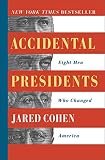
Consider Accidental Presidents by Jared Cohen. Recommended by 10 sources.

Accidental Presidents offers eight narrative portraits of men who succeeded to the U.S. presidency without election, using anecdote-rich scenes and readable context to show how personality and circumstance interact with office power. It’s strongest as a set of self-contained stories that make succession stakes concrete for non-specialist readers; it does not prioritize dense archival argument or exhaustive methodology, so expect some interpretive generalizations and repeated themes across cases. Use it for fast historical orientation rather than scholarly deep-dives.

Similar books

How recommendation signals are reviewed

Each recommendation is collected from a public source — interviews, articles, or curated lists — and linked to its original URL. Books with many verifiable recommendations from respected people rank higher.

Understanding Comics

Understanding Comics

View on Amazon →