
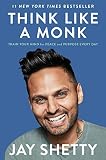
Think Like a Monk
Train Your Mind for Peace and Purpose Every Day
by Jay Shetty

Reading Profile
Should I read this?
Think Like a Monk reads like a warm, conversational guide that turns monastic routines and attitudes into short, everyday practices. Chapters are concise and anchored in personal stories, and the most useful material is the simple prompts and mindset reframes you can try between tasks. The main limit is repetition—stories and optimistic aphorisms recur across chapters, which flattens momentum for some readers. If you want detailed history, skeptical analysis, or tightly argued philosophy, you'll likely feel shortchanged.
Read this if...
- •a junior lawyer working 60–80 hour weeks who needs short mental resets between meetings and commutes; the book supplies bite-sized practices you can test in spare moments.
- •a new parent juggling childcare and sleep disruption who wants quick mindset cues and simple attention practices rather than lengthy programs.
- •a mid-level product manager at a scaling startup questioning whether promotion will bring satisfaction and wanting conversational guidance on values and focus instead of tactical career playbooks.
Skip this if...
- •you want academic rigor or deep historical detail — you'll likely put it down when anecdotes and reassuring aphorisms keep repeating instead of supplying deeper analysis.
- •you dislike personal-brand polish and first-person storytelling — you'll lose interest when similar life stories recur across chapters.
- •you need tightly structured, measurable programs with trackers and step-by-step protocols — this is conversational guidance and short prompts, not a detailed action plan.
Jay Shetty, social media superstar and host of the #1 podcast On Purpose, distills the timeless wisdom he learned as a monk into practical steps anyone can take every day to live a less anxious, more meaningful life.Shetty writes, ?I grew up in a family where you could become one of three things: a doctor, a lawyer, or a failure. My family was conv...
Before You Buy
Reading Specifications
Difficulty:hard
Audience Fit
- a junior lawyer working 60–80 hour weeks who needs short mental resets between meetings and commutes; the book supplies bite-sized practices you can test in spare moments.
- a new parent juggling childcare and sleep disruption who wants quick mindset cues and simple attention practices rather than lengthy programs.
- a mid-level product manager at a scaling startup questioning whether promotion will bring satisfaction and wanting conversational guidance on values and focus instead of tactical career playbooks.
- you want academic rigor or deep historical detail — you'll likely put it down when anecdotes and reassuring aphorisms keep repeating instead of supplying deeper analysis.
- you dislike personal-brand polish and first-person storytelling — you'll lose interest when similar life stories recur across chapters.
- you need tightly structured, measurable programs with trackers and step-by-step protocols — this is conversational guidance and short prompts, not a detailed action plan.
Check formats, pricing, and availability options for Kindle, physical print, or audiobooks directly.
View available editions on AmazonKey themes
Why recommended
Recommended by 3 sources and appears in Buddhism, Most Recommended Books, and Personal Development.
Recommended by notable people
People and public figures who have recommended this book.
Recommendation Signals
Recommendation proof is sourced from public posts, interviews, reading lists, and cited references.
Appears In
Not sure if this is the right fit?
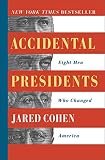
Consider Accidental Presidents by Jared Cohen. Recommended by 10 sources.
“Accidental Presidents offers eight narrative portraits of men who succeeded to the U.S. presidency without election, using anecdote-rich scenes and readable context to show how personality and circumstance interact with office power. It’s strongest as a set of self-contained stories that make succession stakes concrete for non-specialist readers; it does not prioritize dense archival argument or exhaustive methodology, so expect some interpretive generalizations and repeated themes across cases. Use it for fast historical orientation rather than scholarly deep-dives.”
Similar books


How recommendation signals are reviewed
Each recommendation is collected from a public source — interviews, articles, or curated lists — and linked to its original URL. Books with many verifiable recommendations from respected people rank higher.