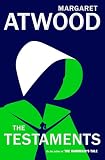
The Sequel to The Handmaid's Tale
by Margaret Atwood
More Recommenders

American businessman and author
“The book may surprise readers who wondered, when the sequel was announced, whether Atwood was making a mistake in returning to her earlier work. It seems to have another aim as well: to help us see more clearly the kinds of complicity required for constructing a world like the one she had already imagined, and the world we fear our own might become.”
Source →Recommended by 3 notable people, including Zoë Foster Blake and Jia Tolentino
Check price on AmazonProof-backed recommendation
Amazon availability
See customer reviews on Amazon →Margaret Atwood returns to a previously established dystopian setting and follows three female narrators whose written accounts drive forward the plot and reveal consequences fifteen years later. The novel is more overtly plot-focused than elliptical, trading some of the earlier novel's atmosphere for clearer narrative payoff and political maneuvering. Strength lies in the shifting viewpoints and courtroom/testimony feel that accelerate toward a tidy resolution. Limitation: readers seeking subtlety or lean lyricism will find recurring exposition and occasional moralizing that slows the momentum.
This summary and audience guidance are AI-generated from the book's description and its recommendation history, last updated June 2026. Recommendations, quotes and sources elsewhere on this page come from published material and are not generated.
When the van door slammed on Offred's future at the end of The Handmaid's Tale, readers had no way of telling what lay ahead for herfreedom, prison or death.With The Testaments, the wait is over.Margaret Atwood's sequel picks up the story more than fifteen years after Offred stepped into the unknown, with the explosive testaments of three female ...
Difficulty:hard
Check formats, pricing, and availability options for Kindle, physical print, or audiobooks directly.
View available editions on AmazonWhy recommended
Recommended by 3 sources and appears in Fiction.
People and public figures who have recommended this book.
Recommendation proof is sourced from public posts, interviews, reading lists, and cited references.
Jia Tolentino
“The book may surprise readers who wondered, when the sequel was announced, whether Atwood was making a mistake in returning to her earlier work. It seems to have another aim as well: to help us see more clearly the kinds of complicity required for constructing a world like the one she had already imagined, and the world we fear our own might become.”
Check formats, pricing, and availability options directly on Amazon.
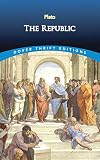
Consider The Republic by Plato. Recommended by 13 sources.
“Plato stages an extended Socratic conversation that moves from concrete questions about justice into broad proposals about an ideal city, the structure of the soul, and what counts as reality and knowledge. Reading alternates brisk question-and-answer snippets with long, cumulative demonstrations that reward careful attention and annotation. Main value: a wealth of thought experiments for testing political and ethical intuitions. Main limitation: repetitive refutations, long policy sketches and dense metaphysical passages can feel abstruse and slow; patience and some philosophical background help.”
Each recommendation is collected from a public source — interviews, articles, or curated lists — and linked to its original URL. Books with many verifiable recommendations from respected people rank higher.