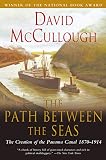
The Path Between the Seas
The Creation of the Panama Canal, 18701914
by David McCullough
3 more
More Recommenders
“12 Books That Every Leader Should Read: Updated for 2018 via @work_matters: The Progress Principle Influence Quiet The Fearless Organization The Path Between the Seas | Come for the governmentaccomplishingastoundingfeats stories, stay for the staggering public health achievements, employee benefit experimentation, and the birth of DC lobbying. Amazing book. | Day 4: I’ve been nominated by @filadin to post covers of 7 books that I love with no explanations or reviews. Each time I post I will ask another to take up the challenge. Today I nominate @HMAesq | This is a good book BTW:”
Source →“12 Books That Every Leader Should Read: Updated for 2018 via @work_matters: The Progress Principle Influence Quiet The Fearless Organization The Path Between the Seas | Come for the governmentaccomplishingastoundingfeats stories, stay for the staggering public health achievements, employee benefit experimentation, and the birth of DC lobbying. Amazing book. | Day 4: I’ve been nominated by @filadin to post covers of 7 books that I love with no explanations or reviews. Each time I post I will ask another to take up the challenge. Today I nominate @HMAesq | This is a good book BTW:”
Source →Recommended by 5 notable people, including Bill Gates and Daniel Pink
Check price on AmazonProof-backed recommendation
Amazon availability
Reading Profile
Should I read this?
Begins with expansive chronological storytelling about efforts to build an interoceanic canal, combining engineering description, diplomatic episodes, and public-health struggles. Most useful as a granular chronology that supplies character portraits, operational detail, and a clear sense of how decisions unfolded over decades. Limitation: long sections on construction techniques, administrative procedures, and disease-control campaigns can feel exhaustive and slow the narrative's momentum. Best read as a patient, chapter-by-chapter immersion rather than a quick reference; expect vivid passages and long stretches that reward sustained attention.
Read this if...
- •an engineering grad student writing about large infrastructure who needs chronological, on-the-ground narrative context rather than dry schematics
- •a high-school or college history teacher preparing a unit on U.S.–Latin America relations who wants colourful anecdotes and characters to bring lectures to life
- •a traveler or expat moving to Panama who wants an immersive origin story of the canal and how those decades shaped the region
Skip this if...
- •you’ll likely put it down when the account dives into extended technical, administrative, and public-health minutiae—those middle stretches are slow
- •annoying if you prefer tight analytical argument or contemporary policy perspective rather than long historical storytelling
- •you’ll lose interest if you want an even-handed, Panamanian-centred narrative; the story spends a lot of time on U.S. strategy, personalities, and institutions
On December 31, 1999, after nearly a century of rule, the United States officially ceded ownership of the Panama Canal to the nation of Panama. That nation did not exist when, in the mid19th century, Europeans first began to explore the possibilities of creating a link between the Atlantic and Pacific oceans through the narrow but mountainous isth...
Before You Buy
Reading Specifications
Difficulty:hard
Audience Fit
- an engineering grad student writing about large infrastructure who needs chronological, on-the-ground narrative context rather than dry schematics
- a high-school or college history teacher preparing a unit on U.S.–Latin America relations who wants colourful anecdotes and characters to bring lectures to life
- a traveler or expat moving to Panama who wants an immersive origin story of the canal and how those decades shaped the region
- you’ll likely put it down when the account dives into extended technical, administrative, and public-health minutiae—those middle stretches are slow
- annoying if you prefer tight analytical argument or contemporary policy perspective rather than long historical storytelling
- you’ll lose interest if you want an even-handed, Panamanian-centred narrative; the story spends a lot of time on U.S. strategy, personalities, and institutions
Check formats, pricing, and availability options for Kindle, physical print, or audiobooks directly.
View available editions on AmazonKey themes
Why recommended
Recommended by 6 sources and appears in Most Recommended Books, History, and Nonfiction.
Recommended by notable people
People and public figures who have recommended this book.
Recommendation Signals
Recommendation proof is sourced from public posts, interviews, reading lists, and cited references.
Rick Klau
“12 Books That Every Leader Should Read: Updated for 2018 via @work_matters: The Progress Principle Influence Quiet The Fearless Organization The Path Between the Seas | Come for the governmentaccomplishingastoundingfeats stories, stay for the staggering public health achievements, employee benefit experimentation, and the birth of DC lobbying. Amazing book. | Day 4: I’ve been nominated by @filadin to post covers of 7 books that I love with no explanations or reviews. Each time I post I will ask another to take up the challenge. Today I nominate @HMAesq | This is a good book BTW:”
View sources (4) ▾80%
Appears In

Not sure if this is the right fit?
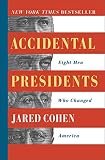
Consider Accidental Presidents by Jared Cohen. Recommended by 10 sources.
“Accidental Presidents offers eight narrative portraits of men who succeeded to the U.S. presidency without election, using anecdote-rich scenes and readable context to show how personality and circumstance interact with office power. It’s strongest as a set of self-contained stories that make succession stakes concrete for non-specialist readers; it does not prioritize dense archival argument or exhaustive methodology, so expect some interpretive generalizations and repeated themes across cases. Use it for fast historical orientation rather than scholarly deep-dives.”
Similar books
How recommendation signals are reviewed
Each recommendation is collected from a public source — interviews, articles, or curated lists — and linked to its original URL. Books with many verifiable recommendations from respected people rank higher.