BookMentionsBookMentions
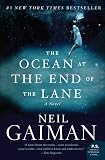
The Ocean at the End of the Lane
4 recommendations

The Ocean at the End of the Lane

A Novel

by Neil Gaiman

Recommended by Amanda Palmer, Radhika Jones +
2 more

More Recommenders

Z

@nehedar my favorite book of @neilhimself’s is the ocean at the end of the land. he will have to speak for himself on the song. i’d imagine he’d say “the bed song” but sometimes he surprises me. | @trib I love that book. So much. | For a while in 2015 I lost the ability to read (PTSD, I’m told) and “The Ocean at the End of the Lane” and Eli Brown’s “Cinnamon & Gunpowder” were the first books I was able to understand and enjoy. @neilhimself’s book in particular was like a hand pulling me up.

Source →
A

@nehedar my favorite book of @neilhimself’s is the ocean at the end of the land. he will have to speak for himself on the song. i’d imagine he’d say “the bed song” but sometimes he surprises me. | @trib I love that book. So much. | For a while in 2015 I lost the ability to read (PTSD, I’m told) and “The Ocean at the End of the Lane” and Eli Brown’s “Cinnamon & Gunpowder” were the first books I was able to understand and enjoy. @neilhimself’s book in particular was like a hand pulling me up.

Source →

Recommended by 4 notable people, including Amanda Palmer and Radhika Jones

Check price on Amazon

Proof-backed recommendation

Amazon availability

Reading Profile

Difficulty:hard
Themes:childhood imagination vs adult memorywonder vs sudden terror

Should I read this?

Reading The Ocean at the End of the Lane feels like stepping into a grown-up fairy tale told from the edge of memory: spare, lyrical prose that mixes childlike wonder with sudden, grotesque jolts. Its useful part is an intense, compact emotional atmosphere — nostalgia braided with uncanny threat — that makes the short book linger after you finish. The main limitation is occasional ambiguity and sentimental turns that leave some readers wanting firmer explanations or more plot substance, and the lyrical style can feel overwritten to those who prefer straightforward prose.

Read this if...

  • A book-club organizer picking a one-meeting novel who needs a short, discussable title — it’s brief, atmospheric, and sparks debate about memory and supernatural meaning.
  • A parent or caregiver navigating recent nostalgia who wants a sharp, evocative read about childhood perspective and the adult aftermath — short enough to finish between obligations.
  • An emerging fiction writer studying tone who wants an example of lyrical, fairy-tale-inflected voice and how compact plotting can carry large emotional stakes.

Skip this if...

  • You’ll likely put it down when the narration leans into mythic ambiguity without clear motives — readers who need firm plot logic often stop here.
  • Annoying if you prefer plot-forward, explanation-heavy novels; the story favors atmosphere and suggestion over explicit answers.
  • Annoying if you dislike sentimental or overtly nostalgic prose; repeated elegiac passages can feel indulgent to readers who want a cleaner emotional line.

A middleaged man returns to his childhood home to attend a funeral. Although the house he lived in is long gone, he is drawn to the farm at the end of the road, where, when he was seven, he encountered a most remarkable girl, Lettie Hempstock, and her mother and grandmother. He hasn't thought of Lettie in decades, and yet as he sits by the pond (a...

Before You Buy

Reading Specifications

Difficulty:hard

Themes:
childhood imagination vs adult memorywonder vs sudden terrorordinary suburbia vs otherworldly old-magic

Audience Fit

Recommended for:
  • A book-club organizer picking a one-meeting novel who needs a short, discussable title — it’s brief, atmospheric, and sparks debate about memory and supernatural meaning.
  • A parent or caregiver navigating recent nostalgia who wants a sharp, evocative read about childhood perspective and the adult aftermath — short enough to finish between obligations.
  • An emerging fiction writer studying tone who wants an example of lyrical, fairy-tale-inflected voice and how compact plotting can carry large emotional stakes.
Not ideal if you want:
  • You’ll likely put it down when the narration leans into mythic ambiguity without clear motives — readers who need firm plot logic often stop here.
  • Annoying if you prefer plot-forward, explanation-heavy novels; the story favors atmosphere and suggestion over explicit answers.
  • Annoying if you dislike sentimental or overtly nostalgic prose; repeated elegiac passages can feel indulgent to readers who want a cleaner emotional line.

Check formats, pricing, and availability options for Kindle, physical print, or audiobooks directly.

View available editions on Amazon

Key themes

childhood imagination vs adult memorywonder vs sudden terrorordinary suburbia vs otherworldly old-magicnarrative certainty vs mythic ambiguitymemory’s feeling vs factual truth

Why recommended

Recommended by 4 sources and appears in Magical Realism, Fantasy, and Fiction.

Recommended by notable people

People and public figures who have recommended this book.

Recommendation Signals

Recommendation proof is sourced from public posts, interviews, reading lists, and cited references.

A

Amanda Palmer

@nehedar my favorite book of @neilhimself’s is the ocean at the end of the land. he will have to speak for himself on the song. i’d imagine he’d say “the bed song” but sometimes he surprises me. | @trib I love that book. So much. | For a while in 2015 I lost the ability to read (PTSD, I’m told) and “The Ocean at the End of the Lane” and Eli Brown’s “Cinnamon & Gunpowder” were the first books I was able to understand and enjoy. @neilhimself’s book in particular was like a hand pulling me up.
View sources (3) ▾80%

Appears In

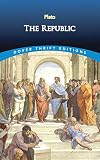
The Republic
Try This Instead

Not sure if this is the right fit?

Consider The Republic by Plato. Recommended by 13 sources.

Plato stages an extended Socratic conversation that moves from concrete questions about justice into broad proposals about an ideal city, the structure of the soul, and what counts as reality and knowledge. Reading alternates brisk question-and-answer snippets with long, cumulative demonstrations that reward careful attention and annotation. Main value: a wealth of thought experiments for testing political and ethical intuitions. Main limitation: repetitive refutations, long policy sketches and dense metaphysical passages can feel abstruse and slow; patience and some philosophical background help.

Similar books

How recommendation signals are reviewed

Each recommendation is collected from a public source — interviews, articles, or curated lists — and linked to its original URL. Books with many verifiable recommendations from respected people rank higher.

The Ocean at the End of the Lane

The Ocean at the End of the Lane

View on Amazon →