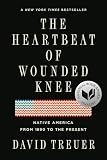
Native America from 1890 to the Present
by David Treuer


Recommended by Barack Obama and Nancy Pearl
Check price on AmazonProof-backed recommendation
Amazon availability
See customer reviews on Amazon →Treuer mixes reporting, legal-history digging, and close cultural portraiture to unsettle tidy stories about Wounded Knee. Chapters work as vivid, often fragmentary scenes rather than a single linear narrative, leaving archival detail and contemporary observation to push and complicate received myths. That approach supplies rich material for someone who wants texture and counter-narratives, but it also creates uneven pacing: legal and archival detours slow momentum and some readers will find recurring asides repetitive or sketchy where they expected a continuous account.
This summary and audience guidance are AI-generated from the book's description and its recommendation history, last updated June 2026. Recommendations, quotes and sources elsewhere on this page come from published material and are not generated.
FINALIST FOR THE 2019 NATIONAL BOOK AWARD LONGLISTED FOR THE 2020 ANDREW CARNEGIE MEDAL FOR EXCELLENCEA NEW YORK TIMES BESTSELLER "Chapter after chapter, it's like one shattered myth after another." NPR"An informed, moving and kaleidoscopic portrait... Treuer's powerful book suggests the need for soulsearching about the meanings of American hist...
Difficulty:hard
Check formats, pricing, and availability options for Kindle, physical print, or audiobooks directly.
View available editions on AmazonWhy recommended
Recommended by 3 sources and appears in American History, Most Recommended Books, and History.
People and public figures who have recommended this book.
Recommendation proof is sourced from public posts, interviews, reading lists, and cited references.
Check formats, pricing, and availability options directly on Amazon.
Consider Accidental Presidents by Jared Cohen. Recommended by 10 sources.
“Accidental Presidents offers eight narrative portraits of men who succeeded to the U.S. presidency without election, using anecdote-rich scenes and readable context to show how personality and circumstance interact with office power. It’s strongest as a set of self-contained stories that make succession stakes concrete for non-specialist readers; it does not prioritize dense archival argument or exhaustive methodology, so expect some interpretive generalizations and repeated themes across cases. Use it for fast historical orientation rather than scholarly deep-dives.”

Each recommendation is collected from a public source — interviews, articles, or curated lists — and linked to its original URL. Books with many verifiable recommendations from respected people rank higher.