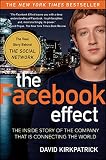
The Inside Story of the Company That Is Connecting the World
by David Kirkpatrick
Recommended by Drew Houston and Dustin Moskovitz
Check price on AmazonProof-backed recommendation
Amazon availability
See customer reviews on Amazon →Reading The Facebook Effect feels like sitting through a long, access-driven profile of a company racing from dormroom experiment to global platform. Its useful part is a granular chronology and inside anecdotes that explain decisions, product rollouts, and growth inflection points that shaped a fast-scaling tech firm. The main limitation is authorial proximity: the narrative sometimes softens criticism and lingers on corporate personalities and timelines, which can read like public-relations-friendly storytelling rather than a hard critical analysis.
This summary and audience guidance are AI-generated from the book's description and its recommendation history, last updated June 2026. Recommendations, quotes and sources elsewhere on this page come from published material and are not generated.
The inside story of Facebook, told with the full, exclusive cooperation of founder Mark Zuckerberg and the company's other leaders. IN LITTLE MORE THAN HALF A DECADE, Facebook has gone from a dormroom novelty to a company with 500 million users. It is one of the fastest growing companies in history, an essential part of the social life not only of...
Difficulty:hard
Check formats, pricing, and availability options for Kindle, physical print, or audiobooks directly.
View available editions on AmazonWhy recommended
Recommended by 3 sources and appears in Most Recommended Books, Technology, and Business.
People and public figures who have recommended this book.
Recommendation proof is sourced from public posts, interviews, reading lists, and cited references.
Check formats, pricing, and availability options directly on Amazon.
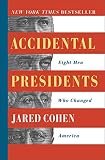
Consider Accidental Presidents by Jared Cohen. Recommended by 10 sources.
“Accidental Presidents offers eight narrative portraits of men who succeeded to the U.S. presidency without election, using anecdote-rich scenes and readable context to show how personality and circumstance interact with office power. It’s strongest as a set of self-contained stories that make succession stakes concrete for non-specialist readers; it does not prioritize dense archival argument or exhaustive methodology, so expect some interpretive generalizations and repeated themes across cases. Use it for fast historical orientation rather than scholarly deep-dives.”

Each recommendation is collected from a public source — interviews, articles, or curated lists — and linked to its original URL. Books with many verifiable recommendations from respected people rank higher.