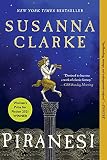
Piranesi
by Susanna Clarke
1 more
More Recommenders
“2021 book wrap up. Buy all or any of these, I thought they were all top drawer: Sad Little Men @BeardRichard Being You @anilkseth The Social Instinct @nicholaraihani Piranesi Suzanne Clarke. Judas 62 @CharlesCumming Once Upon a Crime @FergusCraig (1/n) | Just finished Piranesi, by Susanna Clarke amazing book, lots to think about that will stay with me.”
Source →Recommended by 3 notable people, including Jack Edwards and John Lilly
Check price on AmazonProof-backed recommendation
Amazon availability
Reading Profile
Should I read this?
Susanna Clarke's Piranesi reads like an extended dream: a solitary narrator catalogs an impossible House of halls, tides and statues, and the prose leans lyrical and meticulous. The book's useful part is immersive atmosphere and slow-building revelation about memory, ethics and identity; its main limitation is deliberately repetitive pacing and elliptical plotting that leaves many beats unstated. Rewarding for readers who enjoy ambiguity and texture, annoying for those who expect conventional plot mechanics. It reads equal parts fable and puzzle.
Read this if...
- •a product manager at a legacy consumer app preparing to argue for UX-focused roadmap changes in next-quarter planning — because the book supplies vivid spatial metaphors and patient, detail-rich language you can borrow to explain why small, repeated interactions matter to users right now
- •a museum curator or art conservator finishing an exhibition catalog who wants examples of sensory, nontechnical description for room and object copy — because the novel lingers on artifacts and spaces in a way that shows tone and pacing for evocative catalogue prose
- •a book-club coordinator picking a single 90–120-minute meeting title for a mixed group — because the novel’s elliptical mysteries and moral choices create concrete, debatable prompts without requiring members to wade through a long, plot-heavy epic
Skip this if...
- •you'll likely put it down when the prose keeps circling the same rooms and descriptive passages without clear plot movement — that midsection patience test is where many readers stop
- •annoying if you prefer fast-paced action, visible stakes, or tidy explanations; the book rewards patience, not adrenaline
- •you'll lose interest if you need a large cast, explicit backstory, or systematic worldbuilding; the narrator's limited perspective keeps most facts oblique
From the New York Times bestselling author of Jonathan Strange & Mr Norrell, an intoxicating, hypnotic new novel set in a dreamlike alternative reality.Piranesi's house is no ordinary building: its rooms are infinite, its corridors endless, its walls are lined with thousands upon thousands of statues, each one different from all the others. Within ...
Before You Buy
Reading Specifications
Difficulty:hard
Audience Fit
- a product manager at a legacy consumer app preparing to argue for UX-focused roadmap changes in next-quarter planning — because the book supplies vivid spatial metaphors and patient, detail-rich language you can borrow to explain why small, repeated interactions matter to users right now
- a museum curator or art conservator finishing an exhibition catalog who wants examples of sensory, nontechnical description for room and object copy — because the novel lingers on artifacts and spaces in a way that shows tone and pacing for evocative catalogue prose
- a book-club coordinator picking a single 90–120-minute meeting title for a mixed group — because the novel’s elliptical mysteries and moral choices create concrete, debatable prompts without requiring members to wade through a long, plot-heavy epic
- you'll likely put it down when the prose keeps circling the same rooms and descriptive passages without clear plot movement — that midsection patience test is where many readers stop
- annoying if you prefer fast-paced action, visible stakes, or tidy explanations; the book rewards patience, not adrenaline
- you'll lose interest if you need a large cast, explicit backstory, or systematic worldbuilding; the narrator's limited perspective keeps most facts oblique
Check formats, pricing, and availability options for Kindle, physical print, or audiobooks directly.
View available editions on AmazonKey themes
Why recommended
Recommended by 3 sources and appears in Fantasy and Fiction.
Recommended by notable people
People and public figures who have recommended this book.
Recommendation Signals
Recommendation proof is sourced from public posts, interviews, reading lists, and cited references.
Jack Edwards
“2021 book wrap up. Buy all or any of these, I thought they were all top drawer: Sad Little Men @BeardRichard Being You @anilkseth The Social Instinct @nicholaraihani Piranesi Suzanne Clarke. Judas 62 @CharlesCumming Once Upon a Crime @FergusCraig (1/n) | Just finished Piranesi, by Susanna Clarke amazing book, lots to think about that will stay with me.”
View sources (2) ▾80%
Appears In

Not sure if this is the right fit?
Consider The Republic by Plato. Recommended by 13 sources.
“Plato stages an extended Socratic conversation that moves from concrete questions about justice into broad proposals about an ideal city, the structure of the soul, and what counts as reality and knowledge. Reading alternates brisk question-and-answer snippets with long, cumulative demonstrations that reward careful attention and annotation. Main value: a wealth of thought experiments for testing political and ethical intuitions. Main limitation: repetitive refutations, long policy sketches and dense metaphysical passages can feel abstruse and slow; patience and some philosophical background help.”
Similar books
How recommendation signals are reviewed
Each recommendation is collected from a public source — interviews, articles, or curated lists — and linked to its original URL. Books with many verifiable recommendations from respected people rank higher.