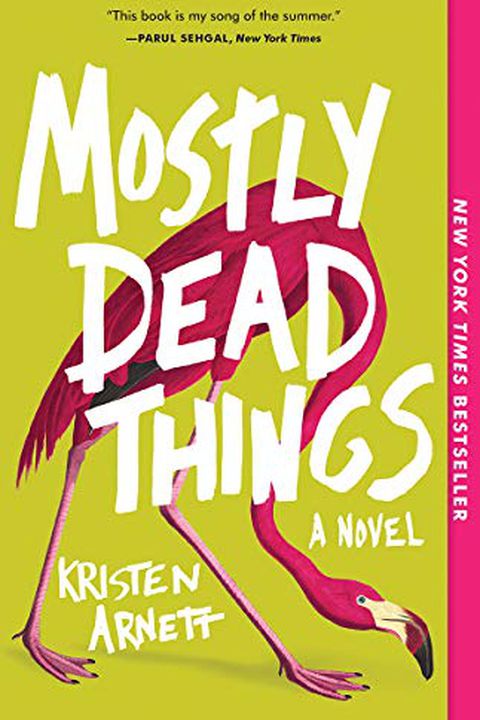
by Kristen Arnett
Tracks JessaLynn Morton as she inherits her late father’s failing taxidermy shop after his suicide, holding together a family that’s falling apart. The book’s value is in its intense, sensory focus—odd objects, workshop minutiae, and domestic ruptures become ways to think about grief, duty, and identity. Its main limitation is its tendency to dwell: readers who prefer tighter plotting or neat resolutions may find the lingering texture and recurring imagery repetitive rather than illuminating.
This summary and audience guidance are AI-generated from the book's description and its recommendation history, last updated May 2026. Recommendations, quotes and sources elsewhere on this page come from published material and are not generated.
What does it take to come back to life For JessaLynn Morton, the question is not an abstract one. In the wake of her father_x0092_s suicide, Jessa has stepped up to manage his failing taxidermy business while the rest of the Morton family crumbles. Her mother starts sneaking into the taxidermy shop to make provocative animal art, while her brother, Mil...
Difficulty:hard
Check formats, pricing, and availability options for Kindle, physical print, or audiobooks directly.
View available editions on AmazonWhy recommended
appears in LGBTQ, Adult, and Fiction.
Recommendation proof is sourced from public posts, interviews, reading lists, and cited references.
No verified recommendation proof available yet.
Check formats, pricing, and availability options directly on Amazon.
Consider The Republic by Plato. Recommended by 13 sources.
“Plato stages an extended Socratic conversation that moves from concrete questions about justice into broad proposals about an ideal city, the structure of the soul, and what counts as reality and knowledge. Reading alternates brisk question-and-answer snippets with long, cumulative demonstrations that reward careful attention and annotation. Main value: a wealth of thought experiments for testing political and ethical intuitions. Main limitation: repetitive refutations, long policy sketches and dense metaphysical passages can feel abstruse and slow; patience and some philosophical background help.”
Each recommendation is collected from a public source — interviews, articles, or curated lists — and linked to its original URL. Books with many verifiable recommendations from respected people rank higher.