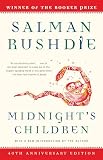
Recommended by 3 notable people, including Patrick Collison and Rupi Kaur
Check price on AmazonProof-backed recommendation
Amazon availability
See customer reviews on Amazon →Rushdie's Midnight's Children arrives as a loud, talkative first-person epic that knits one man's life to a nation's birth. Expect exuberant, frequently digressive prose, sudden leaps between comic anecdotes and bleak historical episodes, and playful magical-realist touches tied to Bombay's cinematic energy. What works best is how personal memory and political history collide in memorable scenes; the main limitation is that the narrator's theatrical asides and dense cultural references pile up, making the middle sections feel sprawling and occasionally hard to follow.
This summary and audience guidance are AI-generated from the book's description and its recommendation history, last updated May 2026. Recommendations, quotes and sources elsewhere on this page come from published material and are not generated.
Anyone who has spent time in the developing world will know that one of Bombay's claims to fame is the enormous film industry that churns out hundreds of musical fantasies each year. The other, of course, is native son Salman Rushdie less prolific, perhaps than Bollywood, but in his own way just as fantastical. Though Rushdie's novels lack the r...
Difficulty:hard
Check formats, pricing, and availability options for Kindle, physical print, or audiobooks directly.
View available editions on AmazonWhy recommended
Recommended by 5 sources and appears in Historical Fiction, Most Recommended Books, and Fantasy.
People and public figures who have recommended this book.
Recommendation proof is sourced from public posts, interviews, reading lists, and cited references.
Check formats, pricing, and availability options directly on Amazon.
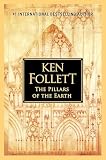
Consider The Pillars of the Earth by Ken Follett. Recommended by 5 sources.
“This sprawling, detail-rich historical novel follows cathedral builders, nobles, and townspeople across decades, delivering immersive scene-setting and a steady accumulation of plotlines. Its useful part is the sustained attention to craft—architecture, politics, rivalry—that makes the medieval world tangible. The main limitation is repetitive melodrama and swings in pacing: long, satisfying set pieces sit beside stretches that feel slow or contrived. Better read slowly rather than skimmed; readers who stick it out will find payoff in the concluding convergences.”
Each recommendation is collected from a public source — interviews, articles, or curated lists — and linked to its original URL. Books with many verifiable recommendations from respected people rank higher.