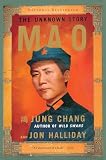
The Unknown Story
by Jung Chang


Recommended by Richard Branson and Dennis Prager
Check price on AmazonProof-backed recommendation
Amazon availability
See customer reviews on Amazon →Jung Chang's biography reads like a long, prosecutorial dossier: dense reporting, many interviews, and a steady stream of startling claims about the Chinese leader at its center. Its useful part is the sheer volume of sourced anecdotes and dramatic allegations that force you to reassess familiar headlines. Its main limitation is tone — the narrative often reads as indictment rather than balanced analysis, repeating condemnations until nuance is squeezed thin; skeptical readers may bristle at selective emphasis. Reading it feels relentless; dramatic passages alternate with exhaustive lists of incidents that may exhaust patience.
This summary and audience guidance are AI-generated from the book's description and its recommendation history, last updated June 2026. Recommendations, quotes and sources elsewhere on this page come from published material and are not generated.
The most authoritative life of the Chinese leader ever written, Mao: The Unknown Story is based on a decade of research, and on interviews with many of Mao's close circle in China who have never talked before and with virtually everyone outside China who had significant dealings with him. It is full of startling revelations, exploding the myth o...
Difficulty:hard
Check formats, pricing, and availability options for Kindle, physical print, or audiobooks directly.
View available editions on AmazonWhy recommended
Recommended by 3 sources and appears in Most Recommended Books, History, and Nonfiction.
People and public figures who have recommended this book.
Recommendation proof is sourced from public posts, interviews, reading lists, and cited references.
Dennis Prager
American writer, speaker, radio and TV commentator
Recommended this book
Check formats, pricing, and availability options directly on Amazon.
Consider Accidental Presidents by Jared Cohen. Recommended by 10 sources.
“Accidental Presidents offers eight narrative portraits of men who succeeded to the U.S. presidency without election, using anecdote-rich scenes and readable context to show how personality and circumstance interact with office power. It’s strongest as a set of self-contained stories that make succession stakes concrete for non-specialist readers; it does not prioritize dense archival argument or exhaustive methodology, so expect some interpretive generalizations and repeated themes across cases. Use it for fast historical orientation rather than scholarly deep-dives.”

Each recommendation is collected from a public source — interviews, articles, or curated lists — and linked to its original URL. Books with many verifiable recommendations from respected people rank higher.