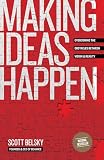
Overcoming the Obstacles Between Vision and Reality
by Scott Belsky


Recommended by 3 notable people, including Derek Sivers and Simon Sinek
Check price on AmazonRecommended by public sources
Amazon availability
See customer reviews on Amazon →Practical and action-focused, Making Ideas Happen reads like a manual for turning creative sparks into finished work. It offers short, tactic-heavy chapters about habits, project organization, and activating collaborators, with concrete rituals and checklists you can borrow right away. The main limitation is a prescriptive, repetitive tone and plenty of illustrative anecdotes that sometimes feel like padding. It lacks hands-on exercises and plug-and-play templates, so use it as inspiration to adapt rather than a guaranteed implementation plan.
This summary and audience guidance are AI-generated from the book's description and its recommendation history, last updated June 2026. Recommendations, quotes and sources elsewhere on this page come from published material and are not generated.
"Ideas are easy. Implementation is hard. This book helps you with the hard part." Guy Kawasaki, author of Enchantment According to productivity expert Scott Belsky, no one is born with the ability to drive creative projects to completion. Execution is a skill that must be developed by building your organizational habits and harnessing the support ...
Difficulty:medium
Check formats, pricing, and availability options for Kindle, physical print, or audiobooks directly.
View available editions on AmazonWhy recommended
Recommended by 4 sources and appears in Most Recommended Books, Personal Development, and Business.
People and public figures who have recommended this book.
Recommendation proof is sourced from public posts, interviews, reading lists, and cited references.
Check formats, pricing, and availability options directly on Amazon.
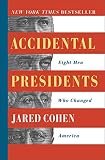
Consider Accidental Presidents by Jared Cohen. Recommended by 10 sources.
“Accidental Presidents offers eight narrative portraits of men who succeeded to the U.S. presidency without election, using anecdote-rich scenes and readable context to show how personality and circumstance interact with office power. It’s strongest as a set of self-contained stories that make succession stakes concrete for non-specialist readers; it does not prioritize dense archival argument or exhaustive methodology, so expect some interpretive generalizations and repeated themes across cases. Use it for fast historical orientation rather than scholarly deep-dives.”

Each recommendation is collected from a public source — interviews, articles, or curated lists — and linked to its original URL. Books with many verifiable recommendations from respected people rank higher.