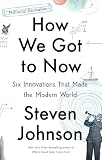
Six Innovations That Made the Modern World
by Steven Johnson
More Recommenders
Recommended by 3 notable people, including Cleo Abram and Chris Fralic
Check price on AmazonProof-backed recommendation
Amazon availability
See customer reviews on Amazon →How We Got to Now is a readable, illustrated collection of historical vignettes that ties familiar modern items — refrigeration, clocks, eyeglass lenses — to earlier inventions and unexpected ripple effects. Its useful part is its pattern-spotting and clear storytelling: short chapters make it easy to jump between episodes and see surprising lines of influence. Its main limitation is light treatment of complexity; technical mechanisms and competing interpretations are often skimmed, and the same connective move can feel repetitive.
This summary and audience guidance are AI-generated from the book's description and its recommendation history, last updated June 2026. Recommendations, quotes and sources elsewhere on this page come from published material and are not generated.
From the New York Times–bestselling author of Where Good Ideas Come From and Everything Bad Is Good for You, a new look at the power and legacy of great ideas.In this illustrated history, Steven Johnson explores the history of innovation over centuries, tracing facets of modern life (refrigeration, clocks, and eyeglass lenses, to name a few) from t...
Difficulty:easy
Check formats, pricing, and availability options for Kindle, physical print, or audiobooks directly.
View available editions on AmazonWhy recommended
Recommended by 4 sources and appears in Most Recommended Books, Science, and History.
People and public figures who have recommended this book.
Recommendation proof is sourced from public posts, interviews, reading lists, and cited references.
Check formats, pricing, and availability options directly on Amazon.
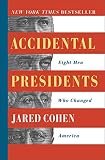
Consider Accidental Presidents by Jared Cohen. Recommended by 10 sources.
“Accidental Presidents offers eight narrative portraits of men who succeeded to the U.S. presidency without election, using anecdote-rich scenes and readable context to show how personality and circumstance interact with office power. It’s strongest as a set of self-contained stories that make succession stakes concrete for non-specialist readers; it does not prioritize dense archival argument or exhaustive methodology, so expect some interpretive generalizations and repeated themes across cases. Use it for fast historical orientation rather than scholarly deep-dives.”

Each recommendation is collected from a public source — interviews, articles, or curated lists — and linked to its original URL. Books with many verifiable recommendations from respected people rank higher.