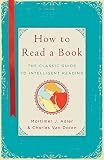
How to Read a Book
The Classic Guide to Intelligent Reading
by Mortimer J. Adler
4 more
More Recommenders
“Light No. Serious. Very serious and scholarly. Advises to read books that are above your current ability. A very specific methodology is given. Read books twice, ask questions while reading, answer those questions, then summarize and criticize afterwards. The point is to grow up to the level of the author. | Now, so far I have not criticized the book, and there’s a reason for this: It’s FANTASTIC. Adler and Van Doren’s writing is fluid, agile, nonjargonladen (aka very clear). The book gives students a repertoire of reading strategies (what they call “levels”). WELL DONE!”
Source →“Light No. Serious. Very serious and scholarly. Advises to read books that are above your current ability. A very specific methodology is given. Read books twice, ask questions while reading, answer those questions, then summarize and criticize afterwards. The point is to grow up to the level of the author. | Now, so far I have not criticized the book, and there’s a reason for this: It’s FANTASTIC. Adler and Van Doren’s writing is fluid, agile, nonjargonladen (aka very clear). The book gives students a repertoire of reading strategies (what they call “levels”). WELL DONE!”
Source →Recommended by 6 notable people, including Derek Sivers and The Rational Walk
Check price on AmazonProof-backed recommendation
Amazon availability
Reading Profile
Should I read this?
How to Read a Book reads like a systematic manual: step-by-step techniques for different levels of reading, from inspectional skimming to comparative, or syntopical, study. Its most useful material is the concrete how-to—question lists, outlining, and rules for tackling specific genres—work you can apply the next day. The tone is didactic and sometimes repetitive; long examples and older literary references make parts feel dated. Treat it as a reference to return to rather than a straight-through pleasure read; it offers no hands-on exercises.
Read this if...
- •a graduate student assembling a literature review who needs a repeatable method for reading, comparing, and synthesizing many sources—useful for learning syntopical reading and mapping arguments across texts
- •a mid-level manager who must digest long technical reports and brief leadership—helps isolate core arguments, outline structure, and produce clear summaries for decision-makers
- •an adult-education instructor or librarian preparing a reading-skills workshop—provides concrete techniques and terminology to teach active reading habits to learners
Skip this if...
- •you'll likely put it down when chapters turn into long lists of rules and extended literary examples—if you dislike dense, prescriptive instruction and dated examples, this is the drop-off point
- •annoying if you prefer quick, modernized how-to with short checklists and interactive exercises—this book lacks hands-on exercises and contemporary digital-reading guidance
- •annoying if you want lively memoir or narrative hooks—the tone is methodical and didactic, which can feel preachy or dry
How to Read a Book, originally published in 1940, has become a rare phenomenon, a living classic. It is the best and most successful guide to reading comprehension for the general reader. And now it has been completely rewritten and updated. You are told about the various levels of reading and how to achieve them – from elementary reading, through ...
Before You Buy
Reading Specifications
Difficulty:hard
Audience Fit
- a graduate student assembling a literature review who needs a repeatable method for reading, comparing, and synthesizing many sources—useful for learning syntopical reading and mapping arguments across texts
- a mid-level manager who must digest long technical reports and brief leadership—helps isolate core arguments, outline structure, and produce clear summaries for decision-makers
- an adult-education instructor or librarian preparing a reading-skills workshop—provides concrete techniques and terminology to teach active reading habits to learners
- you'll likely put it down when chapters turn into long lists of rules and extended literary examples—if you dislike dense, prescriptive instruction and dated examples, this is the drop-off point
- annoying if you prefer quick, modernized how-to with short checklists and interactive exercises—this book lacks hands-on exercises and contemporary digital-reading guidance
- annoying if you want lively memoir or narrative hooks—the tone is methodical and didactic, which can feel preachy or dry
Check formats, pricing, and availability options for Kindle, physical print, or audiobooks directly.
View available editions on AmazonKey themes
Why recommended
Recommended by 7 sources and appears in Learning, Most Recommended Books, and Writing.
Recommended by notable people
People and public figures who have recommended this book.
Recommendation Signals
Recommendation proof is sourced from public posts, interviews, reading lists, and cited references.
Shane Parrish
“Light No. Serious. Very serious and scholarly. Advises to read books that are above your current ability. A very specific methodology is given. Read books twice, ask questions while reading, answer those questions, then summarize and criticize afterwards. The point is to grow up to the level of the author. | Now, so far I have not criticized the book, and there’s a reason for this: It’s FANTASTIC. Adler and Van Doren’s writing is fluid, agile, nonjargonladen (aka very clear). The book gives students a repertoire of reading strategies (what they call “levels”). WELL DONE!”
View sources (2) ▾80%
Appears In

Not sure if this is the right fit?
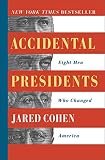
Consider Accidental Presidents by Jared Cohen. Recommended by 10 sources.
“Accidental Presidents offers eight narrative portraits of men who succeeded to the U.S. presidency without election, using anecdote-rich scenes and readable context to show how personality and circumstance interact with office power. It’s strongest as a set of self-contained stories that make succession stakes concrete for non-specialist readers; it does not prioritize dense archival argument or exhaustive methodology, so expect some interpretive generalizations and repeated themes across cases. Use it for fast historical orientation rather than scholarly deep-dives.”
Similar books
How recommendation signals are reviewed
Each recommendation is collected from a public source — interviews, articles, or curated lists — and linked to its original URL. Books with many verifiable recommendations from respected people rank higher.