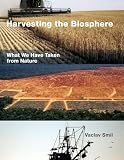
What We Have Taken from Nature
by Vaclav Smil

Recommended by Bill Gates
Check price on AmazonProof-backed recommendation
Amazon availability
Harvesting the Biosphere reads like a rigorous inventory: page-after-page of quantities, flows, and historical comparisons that map human pressure on living matter from hunter-gatherers to industrial agriculture. Its useful part is the quantitative perspective — numbers that reframe scale and limitations more clearly than anecdote or polemic. Its limitation is style: dense data, frequent tables, and an unemotional tone can feel repetitive and dry, which makes the case but distances readers seeking narrative storytelling or prescriptive solutions.
This summary and audience guidance are AI-generated from the book's description and its recommendation history, last updated June 2026. Recommendations, quotes and sources elsewhere on this page come from published material and are not generated.
An interdisciplinary and quantitative account of human claims on the biosphere's stores of living matter, from prehistoric hunting to modern energy production.The biospherethe Earth's thin layer of lifedates from nearly four billion years ago, when the first simple organisms appeared. Many species have exerted enormous influence on the biospher...
Difficulty:hard
Check formats, pricing, and availability options for Kindle, physical print, or audiobooks directly.
View available editions on AmazonWhy recommended
Recommended by 2 sources and appears in Environment, Most Recommended Books, and Science.
People and public figures who have recommended this book.
Recommendation proof is sourced from public posts, interviews, reading lists, and cited references.
Bill Gates
Co-founder of Microsoft; co-chair of the Gates Foundation
“Gives as clear and as numeric a picture as is possible of how humans have altered the biosphere.”
Check formats, pricing, and availability options directly on Amazon.
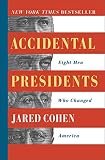
Consider Accidental Presidents by Jared Cohen. Recommended by 10 sources.
“Accidental Presidents offers eight narrative portraits of men who succeeded to the U.S. presidency without election, using anecdote-rich scenes and readable context to show how personality and circumstance interact with office power. It’s strongest as a set of self-contained stories that make succession stakes concrete for non-specialist readers; it does not prioritize dense archival argument or exhaustive methodology, so expect some interpretive generalizations and repeated themes across cases. Use it for fast historical orientation rather than scholarly deep-dives.”

Each recommendation is collected from a public source — interviews, articles, or curated lists — and linked to its original URL. Books with many verifiable recommendations from respected people rank higher.