Recommended by 6 notable people, including Andrew Wilkinson and Tony Robbins
Check price on AmazonRecommended by public sources
Amazon availability
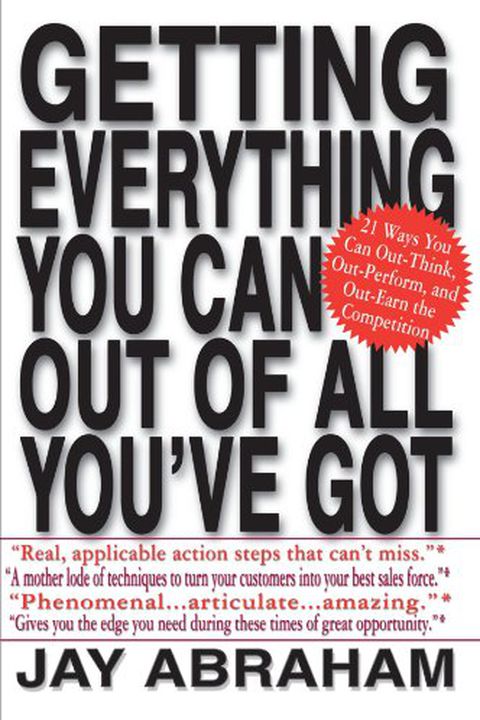
See customer reviews on Amazon →The book reads like a long, high-energy pitch deck: Jay Abraham shares a wide-ranging set of ideas on multiplying business opportunities, client relationships, and revenue streams, all framed as 'hidden assets' that are supposedly obvious once pointed out. The useful part is the sheer volume of provocative prompts that might jolt you to rethink overlooked leverage points. The limitation is the archaic tone and self-congratulatory style; many examples feel dated or stretched to fit his narrative. You'll likely tire of the relentless hype.
This summary and audience guidance are AI-generated from the book's description and its recommendation history, last updated May 2026. Recommendations, quotes and sources elsewhere on this page come from published material and are not generated.
A trusted advisor to America's top corporations and recognized as one of today's preeminent marketing experts, Jay Abraham has created a program of proven strategies to help you realize undreamedof success! Unseen opportunities face each of us every day. Using clear examples from his own experience, Jay explains just how easy it can be to find and...
Difficulty:easy
Check formats, pricing, and availability options for Kindle, physical print, or audiobooks directly.
View available editions on AmazonWhy recommended
Recommended by 9 sources and appears in Most Recommended Books, Personal Development, and Business.
People and public figures who have recommended this book.
Recommendation proof is sourced from public posts, interviews, reading lists, and cited references.
Check formats, pricing, and availability options directly on Amazon.
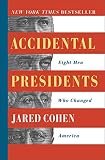
Consider Accidental Presidents by Jared Cohen. Recommended by 10 sources.
“Accidental Presidents offers eight narrative portraits of men who succeeded to the U.S. presidency without election, using anecdote-rich scenes and readable context to show how personality and circumstance interact with office power. It’s strongest as a set of self-contained stories that make succession stakes concrete for non-specialist readers; it does not prioritize dense archival argument or exhaustive methodology, so expect some interpretive generalizations and repeated themes across cases. Use it for fast historical orientation rather than scholarly deep-dives.”

Each recommendation is collected from a public source — interviews, articles, or curated lists — and linked to its original URL. Books with many verifiable recommendations from respected people rank higher.