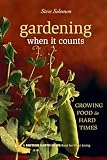
Growing Food in Hard Times (Mother Earth News Wiser Living Series)
by Steve Solomon
A detailed, pragmatic manual for backyard food self-sufficiency aimed at North American gardeners who need high yields with minimal water and cash. It opens by arguing why cheap-oil decline changes what counts as sensible gardening, then pivots into dense, hands-on guidance on bed layouts, soil preparation, watering economy and crop choices. The useful part is concrete plans that lower input costs and boost reliable yields. The limit: a prescriptive, often opinionated tone, repetition of core claims, and advice tailored to temperate North American conditions.
This summary and audience guidance are AI-generated from the book's description and its recommendation history, last updated June 2026. Recommendations, quotes and sources elsewhere on this page come from published material and are not generated.
The decline of cheap oil is inspiring increasing numbers of North Americans to achieve some measure of backyard food selfsufficiency. In hard times, the family can be greatly helped by growing a highly productive food garden, requiring little cash outlay or watering.Currently popular intensive vegetable gardening methods are largely inappropriate ...
Difficulty:hard
Check formats, pricing, and availability options for Kindle, physical print, or audiobooks directly.
View available editions on AmazonWhy recommended
appears in Gardening, Food, and Nonfiction.
Recommendation proof is sourced from public posts, interviews, reading lists, and cited references.
No verified recommendation proof available yet.
Check formats, pricing, and availability options directly on Amazon.
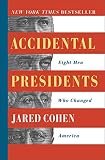
Consider Accidental Presidents by Jared Cohen. Recommended by 10 sources.
“Accidental Presidents offers eight narrative portraits of men who succeeded to the U.S. presidency without election, using anecdote-rich scenes and readable context to show how personality and circumstance interact with office power. It’s strongest as a set of self-contained stories that make succession stakes concrete for non-specialist readers; it does not prioritize dense archival argument or exhaustive methodology, so expect some interpretive generalizations and repeated themes across cases. Use it for fast historical orientation rather than scholarly deep-dives.”

Each recommendation is collected from a public source — interviews, articles, or curated lists — and linked to its original URL. Books with many verifiable recommendations from respected people rank higher.