
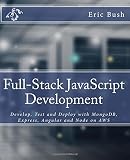
FullStack JavaScript Development
Develop, Test and Deploy with MongoDB, Express, Angular and Node on AWS
by Eric Bush
Reading Profile
Should I read this?
Practical and code-focused, FullStack JavaScript Development walks through building a three-tier application: MongoDB as data layer, Express/Node.js for services, and a hosted presentation layer. It leans on runnable examples and deployment steps rather than abstract architecture, with step-by-step configuration and cloud-hosting guidance to get a stack online. The strongest material is the end-to-end walkthrough tying database, API and hosting into a working app. Drawbacks include long, repetitive setup sequences and opinionated stack choices that may frustrate readers seeking broad design alternatives.
Read this if...
- •a mid-level JavaScript developer at a startup who must ship a prototype fast — needs concrete instructions for Node/Express/MongoDB and cloud hosting to get a demo online.
- •a recent bootcamp grad assembling a portfolio app who needs deployment steps — wants runnable examples and hosting guidance to present a working project in interviews.
- •a front-end engineer joining a full-stack project who must add a simple backend — wants clear wiring examples for data, API routes, and how to deploy them.
Skip this if...
- •you'll likely put it down when long configuration and deployment command sequences pile up; the pace slows into step-by-step ops without frequent high-level signposting.
- •annoying if you prefer high-level architectural theory or concise conceptual overviews — this book favors concrete implementation over abstract discussion.
- •not a good fit if you need in-depth comparisons across different stacks or language ecosystems — the material focuses on one opinionated stack rather than surveying alternatives.
Build FullStack applications with simple to use, yet powerful JavaScript technologies and host everything in the cloud in an economic and agile way. This book contains an allencompassing presentation of theory, reference and implementation for building three tier Architecture,s Data Layer (MongoDB), Service Layer (Express/Node.js) and Presentati...
Before You Buy
Reading Specifications
Difficulty:hard
Audience Fit
- a mid-level JavaScript developer at a startup who must ship a prototype fast — needs concrete instructions for Node/Express/MongoDB and cloud hosting to get a demo online.
- a recent bootcamp grad assembling a portfolio app who needs deployment steps — wants runnable examples and hosting guidance to present a working project in interviews.
- a front-end engineer joining a full-stack project who must add a simple backend — wants clear wiring examples for data, API routes, and how to deploy them.
- you'll likely put it down when long configuration and deployment command sequences pile up; the pace slows into step-by-step ops without frequent high-level signposting.
- annoying if you prefer high-level architectural theory or concise conceptual overviews — this book favors concrete implementation over abstract discussion.
- not a good fit if you need in-depth comparisons across different stacks or language ecosystems — the material focuses on one opinionated stack rather than surveying alternatives.
Check formats, pricing, and availability options for Kindle, physical print, or audiobooks directly.
View available editions on AmazonKey themes
Why recommended
appears in Nodejs.
Recommendation Signals
Recommendation proof is sourced from public posts, interviews, reading lists, and cited references.
No verified recommendation proof available yet.
Appears In
Not sure if this is the right fit?
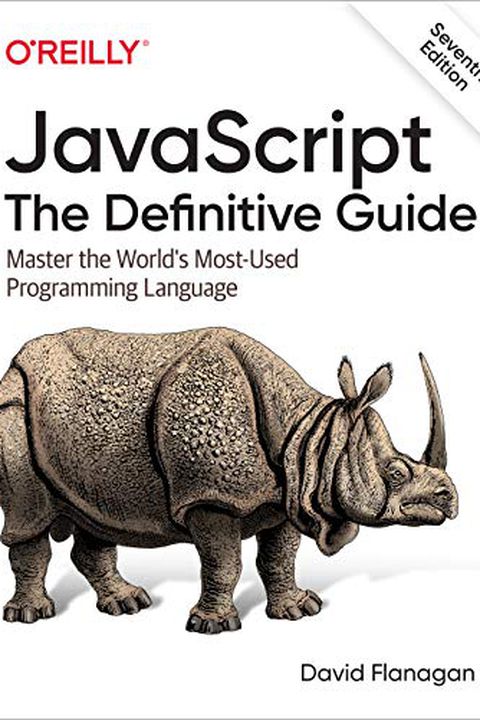
Consider JavaScript by David Flanagan.
“Flanagan's JavaScript reads like a careful language manual: early chapters lay out syntax and ES2017 features with clear examples, mid sections shift into dense API catalogues and cross-browser edge cases, and later parts serve as reference pages you return to. Useful when you need precise behavior explanations and concrete code snippets during debugging or refactoring; annoying when you wanted a project-driven tutorial, because the tone becomes detail-heavy and repetitious and the middle can feel like slogging through tables. Best used in short consults rather than a single marathon read.”
Similar books
How recommendation signals are reviewed
Each recommendation is collected from a public source — interviews, articles, or curated lists — and linked to its original URL. Books with many verifiable recommendations from respected people rank higher.