BookMentionsBookMentions
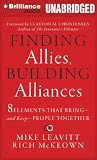
Finding Allies, Building Alliances

Finding Allies, Building Alliances

8 Elements that Bring and Keep People Together

by Mike Leavitt

Check price on Amazon

Proof-backed recommendation

Amazon availability

Reading Profile

Difficulty:easy
Themes:competition vs cooperationpublic-sector urgency vs private incentives

Should I read this?

Finding Allies, Building Alliances reads like a pragmatic guide from a longtime public servant: brisk, anecdote-rich chapters that point to how business leaders and regulators can work together on shared problems. The most useful material is the chapter-level advice on mapping stakeholders, crafting concessions, and sequencing talks so projects become politically viable. The main limitation is a steady reliance on vignettes rather than checklists or hard metrics, so readers expecting hands-on templates or rigorous comparisons may find it lightweight.

Read this if...

  • corporate affairs director at a mid-sized firm trying to rally industry peers before a new regulation lands — because the book gives tactics for aligning competitors and shaping regulatory conversations
  • public-sector program manager piloting a cross-agency initiative who needs practical moves to recruit private partners and build political cover — because it offers negotiation and convening examples drawn from government experience
  • nonprofit executive convening funders, companies, and local agencies to solve a community problem — because it shows how to identify mutual interests and trade-offs that make coalition deals plausible

Skip this if...

  • you'll likely put it down when the same policy anecdotes repeat without concrete templates — anecdote-heavy chapters are the most common drop-off point
  • annoying if you prefer dense data or comparative studies: the book favors stories and practitioner recollections over statistical analysis
  • not useful if you want hands-on exercises or worksheets — lacks step-by-step templates and formal exercises

From Governor and White House cabinet member Mike Leavitt: how to find collaborative solutions to the greatest challengesYour business challenges extend far beyond you and your firm, to the competitors within your industry and the regulators outside it. Finding solutions to larger issues requires cooperation between diverse stakeholders, and in thi...

Before You Buy

Reading Specifications

Difficulty:easy

Themes:
competition vs cooperationpublic-sector urgency vs private incentivesshort-term cost vs long-term benefit

Audience Fit

Recommended for:
  • corporate affairs director at a mid-sized firm trying to rally industry peers before a new regulation lands — because the book gives tactics for aligning competitors and shaping regulatory conversations
  • public-sector program manager piloting a cross-agency initiative who needs practical moves to recruit private partners and build political cover — because it offers negotiation and convening examples drawn from government experience
  • nonprofit executive convening funders, companies, and local agencies to solve a community problem — because it shows how to identify mutual interests and trade-offs that make coalition deals plausible
Not ideal if you want:
  • you'll likely put it down when the same policy anecdotes repeat without concrete templates — anecdote-heavy chapters are the most common drop-off point
  • annoying if you prefer dense data or comparative studies: the book favors stories and practitioner recollections over statistical analysis
  • not useful if you want hands-on exercises or worksheets — lacks step-by-step templates and formal exercises

Check formats, pricing, and availability options for Kindle, physical print, or audiobooks directly.

View available editions on Amazon

Key themes

competition vs cooperationpublic-sector urgency vs private incentivesshort-term cost vs long-term benefitlocal wins vs system change

Why recommended

appears in Project Management.

Recommendation Signals

Recommendation proof is sourced from public posts, interviews, reading lists, and cited references.

No verified recommendation proof available yet.

Appears In

Good to Great
Try This Instead

Not sure if this is the right fit?

Consider Good to Great by Jim Collins. Recommended by 32 sources.

The book walks you through a multi-year research project, contrasting spectacular performers with mere survivors. The core insight—that sustained greatness hinges on disciplined people, thought, and action—feels sturdy and actionable. But the book’s arguments rely on retrospective selection of companies, and some of its darlings later faltered. You’ll find a methodical, almost monastic tone that rewards patience but may irritate if you want contemporary, tech-savvy lessons.

Similar books

How recommendation signals are reviewed

Each recommendation is collected from a public source — interviews, articles, or curated lists — and linked to its original URL. Books with many verifiable recommendations from respected people rank higher.

Finding Allies, Building Alliances

Finding Allies, Building Alliances

View on Amazon →