The Power of the New Digital Disorder
by David Weinberger
Recommended by Tyler Cowen
Check price on AmazonProof-backed recommendation
Amazon availability
Recommended by 2 sources and appears in Most Recommended Books, Technology, and Nonfiction.
Perfectly placed to tell us what's really new about [the] secondgeneration Web.Los Angeles TimesBusiness visionary and bestselling author David Weinberger charts how as business, politics, science, and media move online, the rules of the physical worldin which everything has a placeare upended. In the digital world, everything has its places...
Check formats, pricing, and current availability directly.
Why recommended
Recommended by 2 sources and appears in Most Recommended Books, Technology, and Nonfiction.
People and public figures who have recommended this book.
Recommendation proof is sourced from public posts, interviews, reading lists, and cited references.
Tyler Cowen
“Why is a book the most important organising medium for talking about or reading about the internet Weinberger is a guy who gets this – that the internet is a way of ordering or not ordering reality, that you stack things in a pile, that it appears to be very chaotic, that this is a fundamental change in information processing and it’s not in every way booklike or driven by narrative. I think Weinberger is an important and underrated thinker – this is a book that is easy to comprehend and is also fun. I don’t think it’s made the big splash of Clay Shirky or Sherry Turkle or some other people, but if you want my list of five then it’s got to be on it.”
Check formats, pricing, and availability options directly on Amazon.
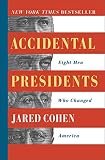
Consider Accidental Presidents by Jared Cohen. Recommended by 10 sources.
“Accidental Presidents offers eight narrative portraits of men who succeeded to the U.S. presidency without election, using anecdote-rich scenes and readable context to show how personality and circumstance interact with office power. It’s strongest as a set of self-contained stories that make succession stakes concrete for non-specialist readers; it does not prioritize dense archival argument or exhaustive methodology, so expect some interpretive generalizations and repeated themes across cases. Use it for fast historical orientation rather than scholarly deep-dives.”

Each recommendation is collected from a public source — interviews, articles, or curated lists — and linked to its original URL. Books with many verifiable recommendations from respected people rank higher.