BookMentionsBookMentions
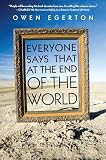
Everyone Says That at the End of the World

Everyone Says That at the End of the World

by Owen Egerton

Check price on Amazon

Proof-backed recommendation

Amazon availability

Reading Profile

Difficulty:hard
Themes:sanity vs cosmic bureaucracyparenthood vs apocalypse

Should I read this?

A loose, imaginative ride that treats Earth as a closing mental asylum and follows oddball characters—a ghost-haunted couple, an arrogant TV actor, and a prophetic hermit crab—through surreal set pieces and satirical detours. Its useful part is voice-driven inventiveness: scenes lean on quirky imagery, tonal shifts, and moral murk rather than conventional plotting. The main limitation is uneven pacing and frequent digressions that frustrate readers who prefer narrative propulsion or strict internal logic. Best enjoyed when you can surrender to strangeness.

Read this if...

  • a fiction MFA student revising a surreal short story and looking for examples of tonal daring and offbeat voice—this supplies playful, risky prose worth dissecting
  • a longtime science-fiction reader tired of hard-SF who wants a weekend escape into character-led, strange-apocalypse territory rather than technical speculation
  • someone expecting a child or recently adjusting to parenthood who wants a darkly comic, non-sentimental look at impending responsibility filtered through absurdist scenarios

Skip this if...

  • you'll likely put it down when long surreal detours repeatedly interrupt any forward momentum; if you need a tight, chapter-to-chapter plot, this will feel meandering
  • annoying if you prefer realistic character psychology or scientifically rigorous worldbuilding—the story privileges surreal mood over plausibility
  • lose interest if you dislike tonal whiplash or frequent shifts between satire, melancholy, and outright absurdism; it can feel inconsistent and indulgent

Earth is the mental asylum of the universe and humans are the incurable inmates. .Now the asylum is being shut down. Everyone Says That at the End of the World traces the adventures of a ghosthaunted slacker couple expecting their first child, an outrageously arrogant television actor seeking redemption and a prophetic hermit crab on a crosscount...

Before You Buy

Reading Specifications

Difficulty:hard

Themes:
sanity vs cosmic bureaucracyparenthood vs apocalypsecelebrity image vs private guilt

Audience Fit

Recommended for:
  • a fiction MFA student revising a surreal short story and looking for examples of tonal daring and offbeat voice—this supplies playful, risky prose worth dissecting
  • a longtime science-fiction reader tired of hard-SF who wants a weekend escape into character-led, strange-apocalypse territory rather than technical speculation
  • someone expecting a child or recently adjusting to parenthood who wants a darkly comic, non-sentimental look at impending responsibility filtered through absurdist scenarios
Not ideal if you want:
  • you'll likely put it down when long surreal detours repeatedly interrupt any forward momentum; if you need a tight, chapter-to-chapter plot, this will feel meandering
  • annoying if you prefer realistic character psychology or scientifically rigorous worldbuilding—the story privileges surreal mood over plausibility
  • lose interest if you dislike tonal whiplash or frequent shifts between satire, melancholy, and outright absurdism; it can feel inconsistent and indulgent

Check formats, pricing, and availability options for Kindle, physical print, or audiobooks directly.

View available editions on Amazon

Key themes

sanity vs cosmic bureaucracyparenthood vs apocalypsecelebrity image vs private guilthaunting vs domestic routineabsurdism vs moral seriousness

Why recommended

appears in Time Travel, Science Fiction, and Science.

Recommendation Signals

Recommendation proof is sourced from public posts, interviews, reading lists, and cited references.

No verified recommendation proof available yet.

Appears In

The Republic
Try This Instead

Not sure if this is the right fit?

Consider The Republic by Plato. Recommended by 13 sources.

Plato stages an extended Socratic conversation that moves from concrete questions about justice into broad proposals about an ideal city, the structure of the soul, and what counts as reality and knowledge. Reading alternates brisk question-and-answer snippets with long, cumulative demonstrations that reward careful attention and annotation. Main value: a wealth of thought experiments for testing political and ethical intuitions. Main limitation: repetitive refutations, long policy sketches and dense metaphysical passages can feel abstruse and slow; patience and some philosophical background help.

Similar books

How recommendation signals are reviewed

Each recommendation is collected from a public source — interviews, articles, or curated lists — and linked to its original URL. Books with many verifiable recommendations from respected people rank higher.

Everyone Says That at the End of the World

Everyone Says That at the End of the World

View on Amazon →