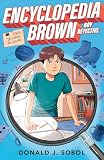
Encyclopedia Brown, Book 1
by Donald J. Sobol
Recommended by Thabiti Anyabwile
Check price on AmazonProof-backed recommendation
Amazon availability
Bright, brisk chapters deliver short, clue-led mysteries that invite readers to pause and guess before a tidy reveal. The useful part is its structure: consistent clue placement, clear logic, and short length make it ideal for read-alouds, classroom practice in inference, or quick confidence-building reads. The annoying part is the formulaic repetition—plots rarely deepen, characters stay thin, and solutions sometimes rely on trivia rather than layered deduction. After a few cases, predictable beats can turn playful puzzling into routine reiteration.
This summary and audience guidance are AI-generated from the book's description and its recommendation history, last updated June 2026. Recommendations, quotes and sources elsewhere on this page come from published material and are not generated.
Leroy Brown, aka Encyclopedia Brown, is Idaville neighborhood?s tenyearold star detective. With an uncanny knack for trivia, he solves mysteries for the neighborhood kids through his own detective agency. But his dad also happens to be the chief of the Idaville police department, and every night around the dinner table, Encyclopedia helps him sol...
Difficulty:easy
Check formats, pricing, and availability options for Kindle, physical print, or audiobooks directly.
View available editions on AmazonWhy recommended
Recommended by 1 source and appears in Children's, Mystery & Crime, and Fiction.
People and public figures who have recommended this book.
Recommendation proof is sourced from public posts, interviews, reading lists, and cited references.
Thabiti Anyabwile
“I don’t remember the first book I ever read. But the first books I fell in love with and taught me that reading is a pleasure were the “Encyclopedia Brown” books. Loved those as a kid!”
Check formats, pricing, and availability options directly on Amazon.
Consider The Republic by Plato. Recommended by 13 sources.
“Plato stages an extended Socratic conversation that moves from concrete questions about justice into broad proposals about an ideal city, the structure of the soul, and what counts as reality and knowledge. Reading alternates brisk question-and-answer snippets with long, cumulative demonstrations that reward careful attention and annotation. Main value: a wealth of thought experiments for testing political and ethical intuitions. Main limitation: repetitive refutations, long policy sketches and dense metaphysical passages can feel abstruse and slow; patience and some philosophical background help.”
Each recommendation is collected from a public source — interviews, articles, or curated lists — and linked to its original URL. Books with many verifiable recommendations from respected people rank higher.